
If you buy links for SEO, there is one document that decides whether your money turns into rankings or into a penalty: the google link spam policy. Most link buyers have never actually read it. They rely on what a vendor told them, or on forum lore from 2019, and they assume that as long as the links are on “high authority” sites, Google’s rules don’t apply. That assumption is exactly how sites end up with manual actions, sudden traffic collapses, and entire link budgets that produced nothing. This guide walks through the policy as it stands in 2026, translates the legal-sounding language into plain buyer decisions, and shows you what you can still do safely.
Here’s the uncomfortable truth up front: Google’s position hasn’t softened. It has expanded. The google link spam policy now explicitly covers manipulation of AI Overviews and AI Mode results, spam enforcement happens continuously instead of in occasional sweeps, and site reputation abuse (third-party content piggybacking on someone else’s authority) has been an enforced policy since May 2024. If you spend money on links, you need to understand where the line is now, not where it was five years ago.
What the Google Link Spam Policy Actually Says
Strip away the legalese and Google’s definition is short: link spam is the practice of creating links to or from a site primarily for the purpose of manipulating search rankings. Notice the word “primarily.” Google cares about intent, not just mechanics. A link placed because a publisher genuinely wanted to recommend your page is fine. A link placed because money, goods, or a reciprocal arrangement motivated it — with ranking benefit as the real goal — falls under the policy.
The policy then enumerates specific violations. Reading that list with a buyer’s eyes, here is what it bans:
- Buying or selling links for ranking purposes. This explicitly includes exchanging money for links or for posts that contain links, exchanging goods or services for links, and sending a product in exchange for a write-up with a link. There is no loophole for “it’s a placement fee, not a link fee.”
- Excessive link exchanges. “Link to me and I’ll link to you” schemes, and partner pages that exist purely for cross-linking, are named violations.
- Automated link creation. Using programs or services to generate links to your site at scale is prohibited outright.
- Required links in contracts. Demanding a link as part of terms of service or an agreement without giving the publisher a choice to qualify the outbound link is a violation.
- Text ads or advertorials that pass ranking credit. Paid articles, sponsored content, and native advertising that include links passing PageRank are link spam. The word “advertorial” is doing real work here — this clause covers paid guest posts dressed up as editorial content.
- Low-quality directory links, forum comment links with optimized anchors, hidden widget links, and low-value content created primarily for link manipulation. This is the clause that kills PBN-style placements and bulk directory packages.
Every one of those bullet points describes a product that is sold to link buyers every single day. The policy is not aimed at abstract spammers; it is aimed, quite literally, at the link-buying market. This is why reading the full text of the google link spam policy — not a vendor’s summary of it — is worth thirty minutes of any buyer’s time.
What Changed in the 2025 and 2026 Updates
The substance of the link spam rules is old. What changed is the scope and the enforcement. In December 2025 and again in May 2026, Google refreshed its spam policy documentation, and the May 2026 update added one sentence that matters enormously: spam now covers techniques that attempt to manipulate generative AI responses in Google Search, not just classic rankings.
Practically, that means the google link spam policy now applies to AI Overviews and AI Mode citations. Buying links to influence which sources get cited in AI answers is a violation under the same rules. Google has also stated that its spam systems work continuously — there is no longer an era of “wait for the next Penguin.” Detection refreshes happen several times a year, and a tactic that survives one refresh has to survive three or four annually.
Two more 2026 facts buyers should internalize. First, Google’s August 2026 spam update did not target link spam, which tells you link-spam enforcement is handled by always-on systems rather than periodic updates — there is no seasonal window of safety. Second, Google’s John Mueller confirmed in April 2026 that when systems recognize a site links out in ways misaligned with policy, Google may simply ignore all outbound links from that site. That means buying from a site already flagged as a link seller doesn’t just fail to help; the link may be treated as nonexistent.
The Paid Link Paradox: What “Safe” Actually Looks Like
Google does acknowledge that paid links exist for legitimate advertising and sponsorship purposes. The condition is firm and quoted directly from the policy: it’s not a violation to have such links as long as they are qualified with a rel=”nofollow” or rel=”sponsored” attribute. This is the only fully compliant way to pay for a link placement.
But here is the paradox every buyer must face: a nofollow or sponsored link passes no PageRank. It will not move your rankings. The compliant version of a paid link does not do the thing most people buy paid links to do. What it still delivers is exposure, brand visibility, and referral traffic — which are genuinely worth paying for, but on advertising terms, not SEO terms.
This creates the central tension of the entire link-buying market. Vendors sell followed links precisely because nofollow doesn’t satisfy buyers’ SEO goals. And the google link spam policy classifies followed paid links precisely as link spam. The thing that makes the link valuable to you is the thing that makes it a violation. There is no third category where a paid link passes ranking credit and complies with policy. Internalize this before you spend another dollar, and a lot of vendor sales talk stops working on you.
That said, “safe” is not binary. Industry research and enforcement patterns point to a risk spectrum. Editorial links earned through PR, original research, and genuinely useful content carry essentially zero policy risk. A sponsored placement properly marked with rel=”sponsored” carries zero policy risk and zero ranking benefit. A single paid guest post on a real site with real traffic carries moderate algorithmic risk — Google may discount it without any visible penalty. Bulk followed placements from link farms and PBNs carry the highest risk of manual action, and manual actions can remove a site from search results entirely.
How Google Detects Link Spam in 2026
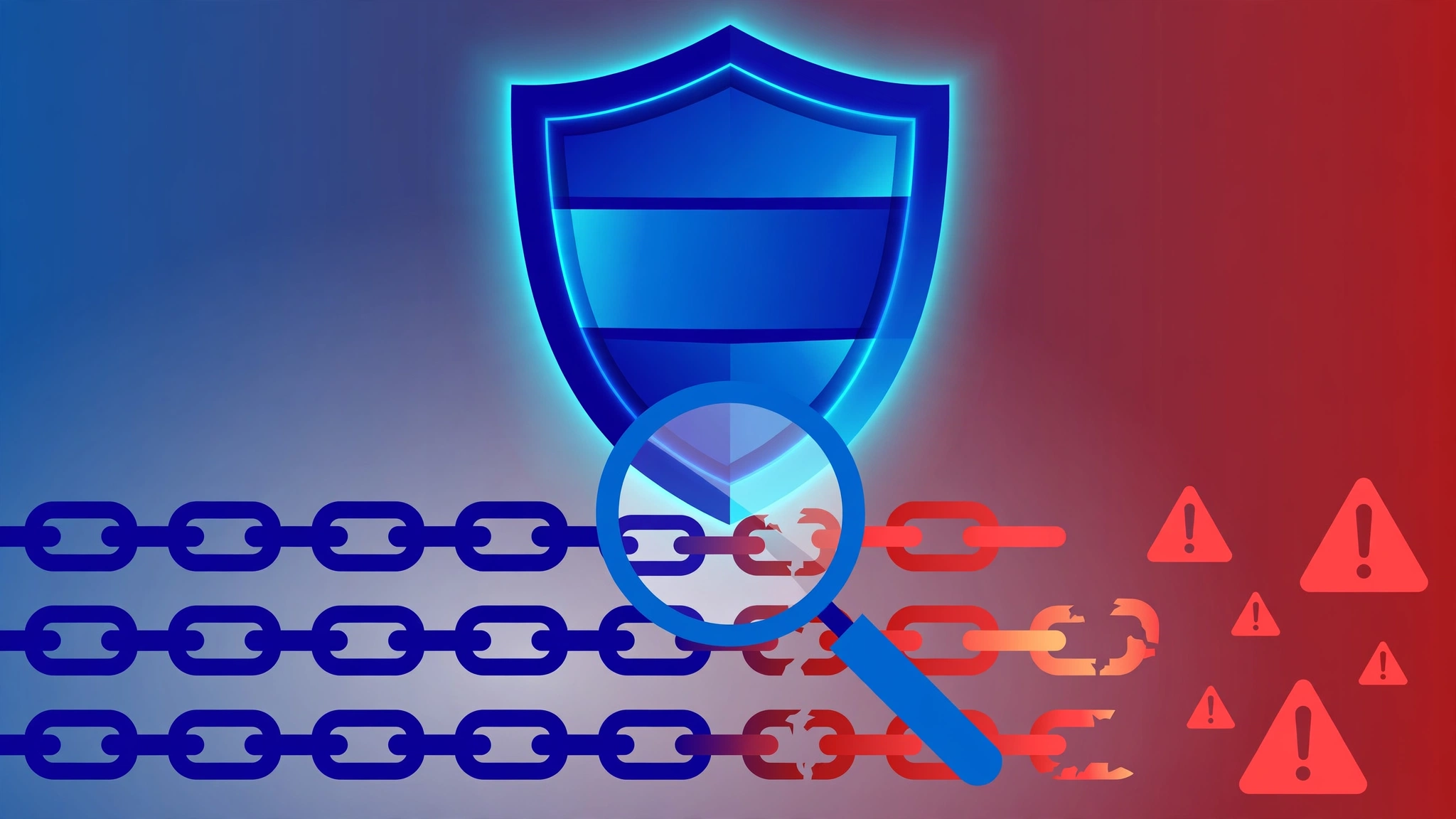
You don’t need to know Google’s internal engineering to understand the detection logic, because the signals are visible in your own analytics and in any link index. Google’s systems look for patterns, and paid link patterns are hard to hide. The google link spam policy gives those systems their marching orders: every enumerated violation corresponds to a pattern that Google’s crawlers and reviewers know how to recognize.
Commercial anchor text at scale. When dozens of new links all carry exact-match money keywords — “buy running shoes,” “cheap business loans” — that’s not how the web links naturally. Natural anchor profiles are dominated by brand names, naked URLs, and generic phrases like “click here.” Repeated commercial anchors are the single loudest signal of manufactured links.
Referring pages with no traffic and no editorial standards. Google can tell which pages real humans visit. A link on a page with zero organic traffic, buried in a site whose every post reads like a keyword-stuffed press release, is weighted accordingly. This is why “high DR” means almost nothing for safety — Google explicitly advises site owners not to trust third-party authority metrics, and no tool has access to Google’s internal ranking systems. A DR 70 site built for selling links is riskier than a DR 30 site with a real audience.
Footprint patterns. PBNs and link farms leave footprints: shared hosting blocks, identical themes, recycled content, and interlinking networks. Google has been mapping these networks for over a decade. Paying for a link on a site that exists to sell links also exposes you to Mueller’s “ignore all outbound links” treatment — your money buys a link that Google silently discounts to zero.
Velocity anomalies. A site that historically earns two links a month and suddenly gains eighty in a week, all from unrelated sites, triggers scrutiny. Not every spike is investigated, but spikes from low-quality sources are exactly what automated systems are tuned to flag.
Detection usually ends in one of two ways: silent discounting (the links simply don’t count, which is the most common outcome) or a manual action (a human reviewer flags the pattern, which can mean ranking suppression or removal). The first wastes your budget; the second can destroy a business. For a deeper look at whether paying for links is ever defensible, see our analysis of is buying backlinks safe.
The Link Buyer’s Compliance Checklist
If you want to keep acquiring links while staying on the right side of the policy, use this checklist before every deal. It converts the policy’s abstract rules into yes/no questions.
- Would this placement make sense if search engines didn’t exist? If the only reason to pay is the SEO value, the policy’s intent test is failed before you start. Referral traffic, audience relevance, and brand exposure should be able to justify the spend alone.
- Is the link qualified if it’s paid for? Any placement you paid for should carry rel=”sponsored” (or nofollow) to be compliant. If a vendor refuses to qualify the link, they’re asking you to carry the entire risk.
- Does the host site have a real audience? Check organic traffic, not DR. A site with genuine readership is a defensible advertising placement; a site with authority metrics but no traffic exists to sell links, and Google knows the difference.
- Is the anchor natural? Branded anchors and naked URLs look editorial. Exact-match commercial anchors at scale look manufactured, and Google’s systems are built to see exactly that pattern.
- Am I diversified? A natural link profile is a mix: editorial mentions, brand citations, some nofollow links, directory listings, and PR coverage. A profile that’s 100% followed guest posts with optimized anchors is a pattern, and patterns are what get flagged.
- Can I survive a discount? Assume every paid link you buy will eventually be neutralized by Google’s systems. If the placement also brings traffic and brand exposure, you still win. If its only value was ranking credit, the budget was a gamble.
Notice what this checklist doesn’t do: it doesn’t promise that any particular followed paid link is “safe.” Nobody honest can promise that, because the google link spam policy draws the line at intent and Google judges intent from patterns. What the checklist does is shift your spend toward placements where a discount is survivable — which is the only realistic risk posture for a buyer in 2026.

FAQs
Is buying backlinks against Google’s link spam policy?
Yes, when the links pass ranking credit. The google link spam policy lists buying or selling links for ranking purposes as a violation, including paying for posts that contain links, exchanging goods or services for links, and advertorials with followed links. Paid placements are only compliant when qualified with rel=”sponsored” or rel=”nofollow”, which also removes the ranking benefit most buyers are paying for.
Can Google actually detect paid links?
Google doesn’t need a receipt to detect them. Its systems read patterns: commercial anchor text repeated at scale, links from pages with no traffic, networks of sites that exist to sell links, and unnatural velocity spikes. In 2026 enforcement runs continuously, not in occasional updates. Most detection ends in silent discounting rather than penalties, but manual actions still happen for egregious patterns.
Does a high domain rating make a paid link safe?
No. Google explicitly tells site owners not to trust third-party authority metrics, and no SEO tool has access to Google’s internal ranking systems. A DR 70 site built to sell links is a worse buy than a DR 30 site with a real audience. Real organic traffic and editorial standards are the signals that matter — for both safety and actual ranking impact.
What happens if my site gets caught buying links?
The most common outcome is that Google simply ignores the paid links, so your budget produces nothing. The severe outcome is a manual action for unnatural links, which can suppress rankings site-wide or remove pages from search results. Recovery requires removing or disavowing the bad links and filing a reconsideration request — a slow, uncertain process that makes prevention far cheaper than cure.
Do nofollow or sponsored links have any SEO value?
They pass no PageRank by design, so they won’t directly move rankings. But they are the only fully compliant form of paid link, and they still deliver referral traffic, brand visibility, and a more natural-looking link profile. They also occasionally lead to genuine editorial coverage later. A healthy link profile includes a natural share of nofollow and sponsored links.
Is link building dead in 2026?
No — but paid link schemes are closer to dead than ever. What works is earning links through original research, digital PR, genuinely useful content, and real outreach. The google link spam policy hasn’t changed its core position in years; what changed is Google’s ability to enforce it continuously, including in AI Overviews. Buyers who adapt to buying exposure instead of buying ranking credit will be fine.
None of this means you should stop investing in links. It means you should stop investing in the kind of links the google link spam policy was written to catch. For a sense of what compliant link acquisition actually costs today, read our breakdown of guest post costs and DR pricing — then apply the checklist above to every opportunity you evaluate.