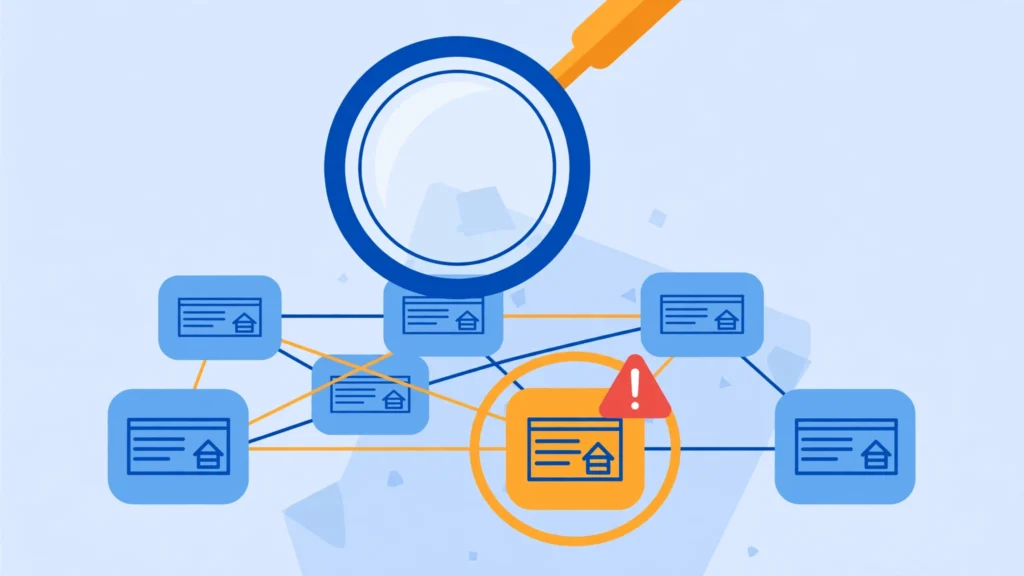
Learning how to spot a PBN before you buy a guest post is one of the highest-value skills any link buyer can develop — it is quite literally buyer protection 101. The link-buying market is full of vendors selling placements on what they call “real blogs with traffic,” and many of them are, in reality, private blog networks dressed up in nicer packaging. One networked link in the wrong place can trigger a ranking collapse that wipes out months of SEO work — while you are still wondering why your traffic dropped.
A PBN — short for private blog network — is a group of websites controlled by a single owner and used to build backlinks to a target site in order to manipulate search rankings. Google’s spam policies explicitly classify this as a link scheme, and its SpamBrain system has become remarkably good at detecting the technical footprints these networks leave behind. When a network is deindexed, every link on it dies, and the sites that bought placements often follow into a manual penalty or an algorithmic demotion.
The dangerous part is not that PBNs exist. The dangerous part is that they are sold to unsuspecting buyers. Dedicated networks sell packages openly, but the more common and more dangerous model is the outreach agency with a concealed PBN: it presents itself as a legitimate link-building service while placing some or all of your links on sites it secretly owns. This guide focuses on the buyer side — the practical signs, tools, and questions that protect your budget and your rankings.
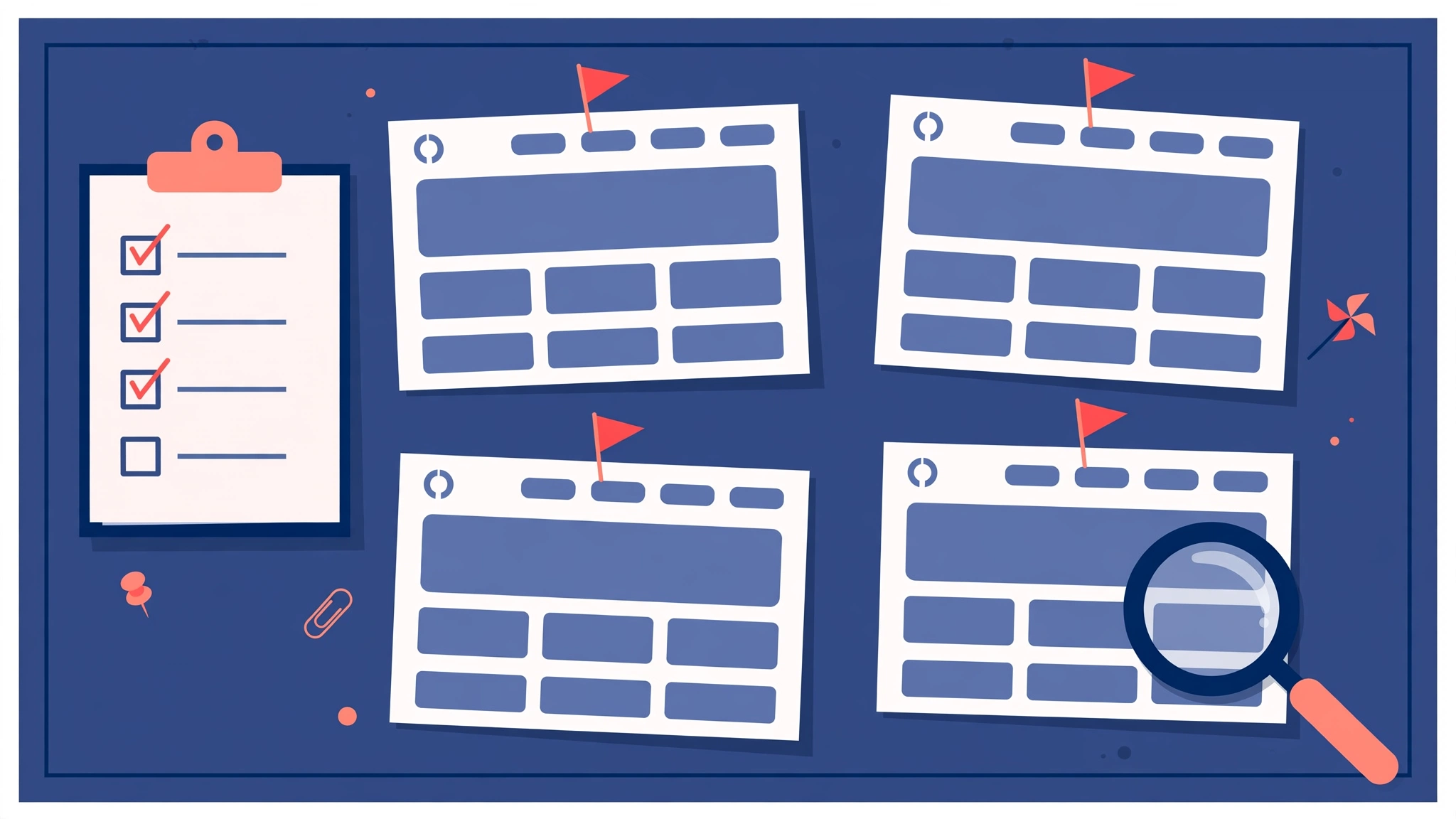
How to Spot a PBN: The 7-Step Buyer Checklist
Work through these checks in order before you pay for any placement. No single red flag proves a site is part of a PBN, but when several appear together, walk away. That compound evidence is exactly how to spot a PBN the way a professional auditor does.
1. Check the traffic-to-authority ratio
This is the fastest single screen you can run when learning how to spot a PBN. Pull the domain into Ahrefs, Semrush, or a free traffic estimator and compare its authority metrics (Domain Rating or Domain Authority) against its real organic traffic. A genuine site with real readership converts authority into visits. A PBN typically shows the opposite: high DR, near-zero organic traffic.
The pattern is so common because PBNs are usually built on expired domains that still carry old backlinks. The authority is inherited; the audience is gone. If a “DR 45” blog gets 50 organic visits a month, that is not a media property — that is a billboard with nobody driving past it. Also watch for sudden traffic spikes in the history: long periods of zero traffic followed by a sharp jump often marks the moment an expired domain was resurrected for selling links. Traffic history is one of the most honest records of how to spot a PBN rebuild before you spend a dollar.
2. Inspect the content for identity and effort
Open the site and read it like a skeptical subscriber would. Real publications have an editorial identity: a consistent niche, named authors, an opinion, a voice. PBNs are distinguished by their lack of investment, effort, and identity. The giveaway signs include:
- No clear theme: articles jumping from medicine to video games to payday loans, because the network wants to sell links in every niche.
- Thin, generic, or AI-flavored content: surface-level articles with no original insight, no data, and no author byline.
- Missing About page and contact details: legitimate sites tell you who they are; PBNs hide behind anonymous contact forms or nothing at all.
- Stale publishing history: a burst of filler posts, then silence, or content published in mechanical batches.
Copy a sentence or two from the site into Google in quotes. If the same content appears verbatim elsewhere, the network is recycling material across its properties. This copy-paste test is a classic step in how to spot a PBN without paid tools.
3. Look at the outbound link pattern
A genuine blog links out because an article needs the reference. A PBN links out because outbound links are the product it sells. Scan a few articles and ask: do the external links feel natural, or do they stick out? This gut check is a surprisingly effective part of how to spot a PBN in the wild.
Watch for aggressive, over-optimized anchor text — exact-match commercial keywords (“best crypto casino UK,” “cheap car insurance”) where a normal writer would use a brand name or a generic phrase. Anchor-text patterns are one of the most reliable signals in how to spot a PBN because they reveal the site’s commercial intent at a glance. Also check whether the links point to wildly unrelated niches. A fitness blog linking to casino sites, CBD shops, and essay-writing services is not exercising editorial judgment; it is monetizing outbound links. Finally, note pages stuffed with many commercial outbound links but little topical reason to mention any of them.
4. Verify the domain’s history
Since most PBNs are recycled expired domains, the Wayback Machine is one of the best free tools for how to spot a PBN with hard evidence. Enter the domain and scroll through its history. What you want to see is continuity — the same topic family, the same branding, evolving naturally over years.
What you fear is a hard break: three years ago it was a local plumbing company or a gardening blog, there is a gap with no content, and suddenly it is a generic “news and lifestyle” site publishing guest posts across twenty industries. That pivot — an old domain rebuilt into an unrelated topic purely to pass ranking signals — is one of the strongest indicators you will ever find. Check WHOIS or RDAP data at the same time: hidden ownership on every property, or identical registrant details across “independent” blogs, adds to the footprint. When in doubt, the archive does not lie — it is one of the most honest records of how to spot a PBN masquerading as a legitimate publication.
5. Hunt for the technical footprint
Google detects PBNs largely through cross-site footprints, and buyers can look for the same patterns. You do not need to be a developer — these checks take minutes:
- Hosting: Are the “independent” sites you are reviewing all on the same IP or hosting provider? Tools like SpyOnWeb reveal which sites share an IP with any given domain.
- Design and theme: Similar layouts, navigation, and color schemes across supposedly unrelated blogs suggest one operator. WordPress themes often leave the theme name in the source code — right-click, view source, and compare.
- Tracking codes: Shared Google Analytics, AdSense, or affiliate tracking IDs across multiple sites are traceable by design and are one of the cleanest fingerprints of common ownership.
- Ownership: Identical contact emails, privacy services, or registrant organizations on domains that claim to be independent.
Older networks were sloppy about all of this. Modern ones hide better, but at scale, perfect separation is expensive — and most networks cut corners somewhere. Finding even one shared footprint is often the decisive moment in how to spot a PBN operation conclusively.
6. Audit the backlink profile of the selling site
Ironically, the site selling you the link has its own backlink profile, and auditing it is a powerful step in how to spot a PBN. In Ahrefs or Semrush, filter the domain’s backlinks to dofollow, one link per domain, and look for:
- Heavy interlinking with a cluster of other low-traffic domains (the network linking to itself).
- Redirect chains and 301s from other expired domains feeding it authority.
- Irrelevant or foreign-language backlinks that make no editorial sense.
- A high Moz spam score relative to genuinely editorial sites in the same niche.
Then look at the anchors pointing at the seller’s site: waves of exact-match keyword anchors are a sign the domain was itself built with manipulative links, not editorial coverage.
7. Pressure-test the seller, not just the site
Many buyers skip this step, and it is the one that catches concealed networks — which is exactly why learning how to spot a PBN requires interrogating the seller, not just the site. Before paying, ask the vendor directly: “Do you own any of the sites you place links on?” Legitimate outreach agencies answer “no” immediately and can show you sample domains, traffic screenshots, and editorial standards. PBN operators stall, refuse sample domains, or insist you “trust the metrics.”
Run these commercial checks too:
- Price too low: real editorial outreach is expensive. Placements below roughly $80 almost always mean a network.
- Delivery in days: genuine outreach takes weeks of pitching and revision. “Any niche, delivered in 48 hours” is a PBN promise.
- Niche-agnostic placement: if the vendor can place a casino link, a SaaS link, and a florist link on the same “network of blogs,” it is a network — literally.
- No site examples upfront: a seller who will not show you where your link will live is hiding the product for a reason.

If you want the full picture on what safe link buying actually looks like — including how legitimate guest posts differ from network placements — read our companion guide on whether buying backlinks is safe. For the pricing context that makes PBN offers look suspiciously cheap, see our breakdown of what guest posts really cost in 2026.
What Happens If You Already Bought PBN Links
Discovering a past purchase sat on a network is stressful but fixable. First, do not panic-buy a disavow file for every link you own — disavowing legitimate links can hurt you. Audit first: run your domain through a backlink audit tool (Semrush’s Backlink Audit or Ahrefs’ link list) and flag domains showing the patterns from this checklist — retroactive work on how to spot a PBN links you already bought. Google’s own spam policies documentation confirms that participating in link schemes can trigger manual actions, so document your findings.
If you received a manual action notice in Search Console, use the disavow tool as part of your cleanup and submit a reconsideration request describing what you removed. If there is no manual action but you see suspicious network links, disavow the clear offenders and shift future budget to editorial placements. One recovery note: rankings rarely snap back the day a penalty is lifted — rebuilding trust takes consistent, clean link acquisition over months.
The Smart Buyer Playbook Going Forward
Knowing how to spot a PBN is a defensive skill — and the habit pays off after the purchase too, because networks change hands and clean sites get repurposed. The offensive version is building a repeatable vetting process so every purchase goes through the same gates. Here is a compact version you can reuse:
- Sample first: never pay before seeing the actual domains, not just metrics.
- Traffic over authority: real organic traffic beats an inflated DR every time.
- History check: Wayback + WHOIS on every domain, every time.
- Content read: skim three articles; if they feel written for no one, the site exists for links.
- Footprint scan: shared IPs, themes, and tracking IDs across “independent” sites.
- Seller interview: direct ownership question, plus price and turnaround sniff tests.
- Ongoing monitoring: re-check placements quarterly — legitimate sites get repurposed into networks more often than buyers expect.
That last point deserves emphasis. A site that was clean when you bought the link can be acquired by a network operator later. A quarterly re-audit of your most valuable placements — traffic, content quality, ownership — catches the drift before it costs you rankings. A documented process for how to spot a PBN protects every future purchase, not just this one.
| Check | Healthy sign | PBN red flag |
|---|---|---|
| Traffic vs. authority | Steady organic traffic matching DR | High DR, near-zero traffic |
| Content identity | Clear niche, named authors, opinion | Random topics, anonymous, thin |
| Outbound links | Natural, topically relevant | Exact-match anchors to unrelated niches |
| Domain history | Continuous topic over years | Expired-domain pivot to unrelated niche |
| Technical footprint | Unique hosting, design, tracking | Shared IP, theme, or analytics IDs |
| Seller behavior | Samples upfront, weeks-long turnaround | No samples, 48-hour delivery, any niche |
FAQs
Still have questions about how to spot a PBN in a real buying situation? These cover the most common buyer concerns.
What exactly is a PBN, and why is it risky?
A private blog network is a group of websites controlled by one owner and used to manipulate search rankings through artificial backlinks. It is risky because it violates Google’s spam policies: when the network is detected — and SpamBrain improves every year — the network is deindexed and buying sites can face manual penalties or algorithmic demotions.
Can a PBN look like a real, legitimate website?
Yes, and the best ones do. Modern networks invest in decent design, human-written content, and social profiles specifically to pass a casual inspection. That is why visual checks alone are not enough. Always combine design impressions with hard data: traffic history, domain history in the Wayback Machine, shared technical footprints, and the seller’s willingness to show you domains before payment.
What is the single fastest way to spot a PBN before buying?
Compare the domain’s authority metric against its real organic traffic. A high DR or DA paired with almost no organic visitors is the fastest, most reliable screen available to a buyer. It takes under two minutes in Ahrefs or Semrush and catches the expired-domain rebuild pattern that defines most networks sold to link buyers today.
How do I vet a link seller before I pay them?
Ask for sample domains before paying, check each one independently for organic traffic and publishing history, and ask directly whether the seller owns any placement sites — legitimate agencies answer no immediately. Be suspicious of prices under $80, delivery promised in days, placement “in any niche,” and any refusal to disclose the actual domains involved.
Should I disavow PBN links I already bought?
Audit first, disavow second. Use a backlink audit tool to identify domains showing network patterns — shared footprints, zero traffic, expired-domain pivots — then disavow the clear offenders. If you have a manual action in Search Console, disavow as part of your cleanup and submit a reconsideration request. Never mass-disavow without reviewing, or you may remove links that were helping.
Are link farms and PBNs the same thing?
They are related but not identical. Both exist to manipulate rankings with artificial links, but link farms are typically automated, low-quality, and indiscriminate, while PBNs are manually controlled networks — often built on expired domains with real authority — designed to look legitimate. A PBN is more dangerous for buyers because it is harder to recognize at a glance.
The bottom line: how to spot a PBN is not a single trick but a discipline — traffic checks, history checks, footprint scans, and seller pressure-tests, applied to every purchase, because networks evolve and sellers adapt. Build that habit and you will never again pay network prices for network risk. Browse vetted link opportunities →