Launching a new website and wondering whether to buy backlinks for new website growth is one of the most common — and most mishandled — decisions in SEO. Do it right and you compress months of slow authority-building into a manageable ramp. Do it wrong and you hand Google a textbook footprint of manipulation on a domain with zero trust to absorb it.
The good news: new sites absolutely can acquire paid links safely. The bad news: nearly every “starter package” sold to beginners — 50 directory links, 20 blog comments, a blast of exact-match anchors in week one — is designed to look like exactly what it is. This guide gives you the safe starter strategy: what to buy, how much, how fast, and the mistakes that get new domains filtered before they ever rank.
Why New Websites Are Different
A new domain has three handicaps that change every link-buying decision. First, it has no link history, so every link you add is a large percentage of your total profile — ten spammy links on a ten-link profile is catastrophic; the same ten on a thousand-link profile is noise. Second, it sits in what SEOs call the sandbox observation period: Google watches new sites closely and is slow to trust sudden authority signals. Third, it has no branded search volume and no natural anchor diversity, so an aggressive exact-match campaign stands out immediately.
None of this means you should wait six months to build links. It means your first links must look like the links a genuinely promising new site earns: a few branded mentions, a founder interview, a niche directory listing, one solid guest post. That is why the decision to buy backlinks for new website growth deserves its own playbook, separate from the tactics that work on established domains. Boring is the strategy. Boring is what survives. Every safe plan to buy backlinks for new website rankings starts with this boring foundation.
Buy Backlinks for New Website: The 90-Day Starter Plan
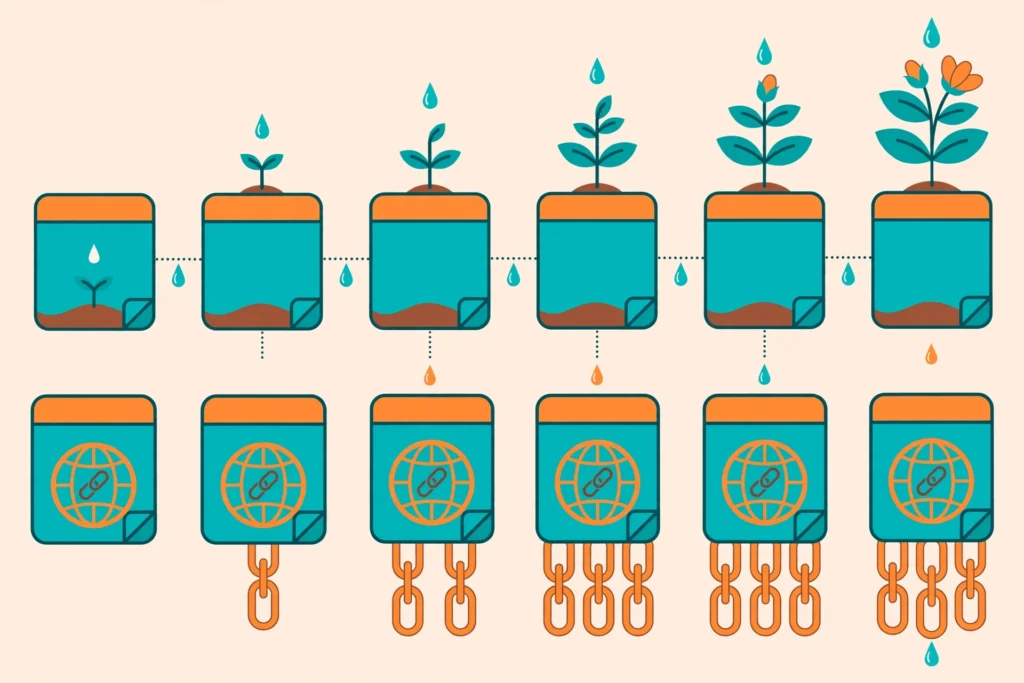
Here is a month-by-month framework for the first 90 days. It assumes a modest budget of $500–$1,500/month and a site with real content worth linking to — if your site has five thin pages, fix that first, because no link strategy saves thin content. Follow it as written and you will buy backlinks for new website projects the way experienced SEOs do.
Month 1: Foundation (5–10 links, $300–$600)
The goal is a believable base, not rankings. Buy or build:
- 1–2 niche directory or resource-page listings — real directories in your industry, not the 500-directory blast packages. These give you naked-URL and branded anchors.
- 1 founder/brand mention — a short interview, a podcast appearance, or a quote in a roundup post. Branded anchor, natural context.
- 2–3 social profiles and citations — LinkedIn company page, Crunchbase, industry profiles. Nofollow is fine; they diversify the profile.
- 1 guest post on a small but real niche blog — DR 20–40, real traffic, genuine editorial review. One contextual link with a branded or partial-match anchor.
Total: under 10 links, zero exact-match commercial anchors. This looks exactly like a new business doing normal marketing. Spread across four weeks, this is exactly how to buy backlinks for new website domains in month one.
Month 2: Acceleration (8–15 links, $500–$1,000)
Now you add editorial links with intent:
- 2–3 guest posts on mid-tier niche publications (DR 30–55), each with one link to a key page using partial-match or branded anchors.
- 1 niche edit on an existing aged article in your niche — faster indexing than a new guest post, good for pushing one priority page.
- 1–2 more brand mentions via HARO-style journalist requests or expert roundups.
- Keep 1–2 directory/citation additions for profile diversity.
You can introduce your first exact-match anchor here — exactly one, on your least commercial target page, surrounded by branded and generic anchors. This is the phase where buyers who buy backlinks for new website projects either build real momentum or blow up the profile, and anchor restraint is what separates the two outcomes. Patience is the real differentiator when teams buy backlinks for new website assets.
Month 3: Momentum (12–20 links, $800–$1,500)
By month three your profile has 25–45 links with natural diversity, and you can run a real campaign. This is where teams that buy backlinks for new website pages see compounding returns.
- 3–5 guest posts targeting your priority commercial pages, with a controlled anchor mix (mostly branded/partial, a couple of exact-match).
- 1–2 niche edits for speed on pages that need movement now.
- First small digital PR push if budget allows — even a simple original survey in your niche can earn 5–15 editorial links in one burst.
- Continue the background rhythm of 1–2 brand mentions or citations per month.
From month four onward, graduate to a steady-state pace: 10–20 quality links per month, which our safe link-pacing guide covers in full detail. Teams that buy backlinks for new website growth successfully rarely deviate from this ramp.
The Safest Link Types for a Brand-New Domain
Not all paid links carry the same risk on a new site. Ranked from safest to riskiest for months 1–3. Work top-down through this list whenever you buy backlinks for new website authority.
- Brand mentions and interviews — branded anchors on real publications. Nearly zero risk; this is what real startups earn.
- Niche directories and citations — real, curated directories in your industry. Low risk in small numbers.
- Guest posts on real niche blogs — editorial content with genuine review. Low risk when the site has real traffic and the content is genuinely useful.
- Niche edits on aged content — medium-low risk; the hosting page already has history, but the sudden new outbound link is a mild signal. Fine in moderation.
- High-DR guest posts on generalist sites — medium risk for new sites; a DR 70 link in month one looks odd next to a 10-link profile. Save these for month 3+.
- Exact-match anchors to commercial pages — the highest-risk element. Keep under 5% of your profile for the first six months.
- Link packages, PBNs, and bulk blasts — never safe, but on a new domain they are close to a guaranteed filter. Avoid entirely.
The pattern: the closer a link is to something a real new business would earn through normal marketing, the safer it is. If your plan is to buy backlinks for new website authority in the first quarter, work strictly top-down through the list above and buy the boring links first.
Anchor Text Rules for New Sites
Anchor text is where most new-site campaigns die, and every experienced guide on how to buy backlinks for new website projects safely converges on the same rules, because the data is unambiguous. A new domain with 30 links where 12 use the exact commercial keyword is a neon sign reading “manipulated.” Follow these rules for the first six months. These ratios are non-negotiable for the first six months whenever you buy backlinks for new website campaigns.
- 60%+ branded anchors — your brand name, domain name, “the team at [Brand].” This should dominate.
- 15–20% naked URLs — the raw domain as clickable text, natural in directories and profiles.
- 10–15% generic — “click here,” “this guide,” “learn more.”
- Under 5% exact match — one or two exact-match anchors total in the first 90 days, no more.
- Remainder partial match — keyword variations with natural context (“this beginner’s link-building guide”).
As your profile grows past 100 links, you can gradually shift toward more commercial anchors — but the branded foundation must come first. Anchor diversity is not a nice-to-have on a new site; it is the camouflage that lets everything else work.
Vetting: The Step Beginners Skip
The single most expensive mistake new buyers make is not the pacing or the anchors — it is buying links on bad sites. When you buy backlinks for new website campaigns, vetting is not overhead; it is the campaign. A link from a PBN or a deindexed “write for us” farm does not just waste money; on a new domain it can poison the profile before it has any positive history to dilute the damage.
Before you pay for any placement, run the checks in our 12-point site vetting checklist: real organic traffic (not just DR), recent real content, an actual editorial process, and outbound links that go to legitimate sites rather than casinos and payday loans. Five minutes of vetting per site saves months of cleanup later.
Two red flags deserve special emphasis for new-site buyers. First, any vendor selling “DA 50+ guest posts” for under $100 is selling PBN placements — real editorial links on authoritative sites cost real money because acceptance rates are low. Second, any package promising dozens of links in the first week is promising exactly the velocity spike that triggers algorithmic review on new domains. Learning to buy backlinks for new website campaigns means learning to say no to 90% of vendors.
What Google Actually Penalizes (and What It Ignores)
Google’s spam policies prohibit links intended to manipulate rankings, and buying followed links for SEO is technically in scope. But enforcement in 2026 is overwhelmingly algorithmic and pattern-based, not a human reviewing your receipts.
What actually gets new sites filtered: sudden spikes of dozens of referring domains in week one, 100% dofollow profiles (real sites attract nofollow links too — aim for 70–80% dofollow max), repeated identical anchors, and links from irrelevant or spammy neighborhoods. The safest way to buy backlinks for new website SEO is to build a profile that would pass a manual review, even though one will probably never happen. This pattern-based enforcement is exactly why disciplined buyers can buy backlinks for new website growth for years without a single manual action. What Google largely ignores: a slow drip of editorial links on real sites with natural anchor diversity. SpamBrain evaluates the shape of your profile, not your invoices.
One more honest note: cheap links are the most expensive links. Industry data consistently puts a genuinely quality editorial backlink at $350–$500, with anything well under $200 almost certainly coming from a PBN or link farm. On a new domain, one toxic link does more damage than ten good links do good. Buy fewer, better links.
The 5 Mistakes That Kill New Sites
These are the five ways buyers who buy backlinks for new website launches most often sabotage themselves:
1. The week-one blast. Fifty links in the first seven days on a zero-history domain. This is the single most common way beginners trigger a filter. Spread month one’s links across four weeks.
2. Exact-match anchor assault. Pointing ten links with “best CRM software” at your homepage in month one. Keep commercial anchors under 5% until month six.
3. Buying on metrics alone. A DR 60 site with zero traffic and 400 “write for us” posts is not an authority site — it is a link farm with a good metric. Traffic and editorial standards beat DR every time.
4. Ignoring the nofollow ratio. A profile that is 100% dofollow looks purchased because it is. Let 20–30% of your early links be nofollow (profiles, citations, some PR pickups) — they still build trust signals.
5. Linking only to the homepage or one money page. Real sites earn links to blog posts, tools, resources, and about pages. Spread your first 30 links across at least 5–8 different URLs.
Frequently Asked Questions
Should a new website buy backlinks?
A new website can buy backlinks safely if it follows a conservative strategy: start with branded anchors on real publications, keep velocity low (5–10 links in month one), and vet every site for real traffic and editorial standards. Any plan to buy backlinks for new website growth should start from this checklist. What new sites must avoid is bulk packages, PBNs, and exact-match anchor blasts — these trigger algorithmic filters precisely because new domains have no trust history to absorb them.
How many backlinks should a new website get per month?
For the first 90 days, aim for 5–10 links in month one, 8–15 in month two, and 12–20 in month three — roughly 25–45 total. This gradual ramp mimics how a real new business earns attention. From month four, 10–20 quality links per month is a sustainable pace. Never buy a package that delivers dozens of links in the first week on a new domain.
What type of backlinks are safest for a new website?
Brand mentions, founder interviews, niche directory listings, and guest posts on real niche blogs with branded or naked-URL anchors are the safest starting links. They mirror what a genuine new business earns through normal marketing. This is the shortlist to use whenever you buy backlinks for new website authority for the first time. Avoid exact-match anchors to commercial pages, high-DR placements in month one, and any form of bulk or PBN link for at least the first six months.
When should a new website start building backlinks?
Start in week one — but start small and boring. There is no benefit to waiting six months; the “sandbox” observation period passes faster for sites that steadily accumulate natural-looking links. Begin with citations, profiles, and one or two brand mentions in month one, then layer in guest posts from month two. The mistake is not starting early, it is starting aggressively. Start conservative when you buy backlinks for new website projects and scale from there.
Can buying backlinks get a new website penalized?
Yes, if the pattern looks manipulated: sudden link spikes, 100% dofollow profiles, repeated exact-match anchors, or links from spammy networks. Google’s SpamBrain systems evaluate the shape of your link profile, and new domains are scrutinized more closely because they have no positive history. A slow drip of editorial links on vetted sites with diverse anchors, however, rarely triggers any action.
How long before backlinks help a new website rank?
Expect 3–6 months before new-site links translate into meaningful rankings. Google is slow to trust new domains, and links typically take 4–12 weeks to be discovered, indexed, and factored in — longer during the initial observation period. Niche edits on already-indexed pages can move the needle slightly faster than new guest posts. Plan your budget for at least two quarters, not two weeks. Budget accordingly when you buy backlinks for new website growth — think in quarters, not weeks.
Start Your New Site the Safe Way
If you are ready to buy backlinks for new website growth, do it on sites you have actually vetted, at a pace that looks human, with anchors that look earned. The GuestPostOffice marketplace lists real publications with verified traffic metrics — filter by niche, check the numbers yourself, and build your first 10 links the boring, safe way. Browse vetted sites and place your first order today. Start small, vet everything, and buy backlinks for new website growth like a professional — the boring way.