
If you are wondering how many backlinks per month is safe to build or buy, here is the honest answer: there is no single magic number — but there is a safe range for your situation, and this guide will help you find it. Most link buyers either build far too few links to move the needle or far too many too fast, and both mistakes cost money.
Below you will learn why the question of how many backlinks per month to target is really a question about link velocity — the speed at which your site gains links — plus safe monthly targets by website age, the five pacing mistakes that trigger Google’s filters, and a practical framework for pacing bought links so they look natural. Treat backlinks per month as a pacing metric rather than a quota, and the rest of this guide will click into place.
Why “How Many Backlinks Per Month” Is the Wrong First Question
Ask ten SEOs how many backlinks per month are safe and you will get ten different numbers. That is because the number alone means almost nothing. Google does not have a published monthly link quota, and it never has. What Google’s systems actually watch is the pattern of your link growth — sudden, unnatural spikes on a site with no history of earning links.
Think of it the way search engineers do. A link profile has a baseline: how many links your site typically earns in a month. When a three-month-old blog with twelve total backlinks suddenly gains two hundred links in a week, that breaks the baseline so violently that it looks engineered — because it usually is. The same two hundred links spread across a year on an established site with thousands of existing links would barely register.
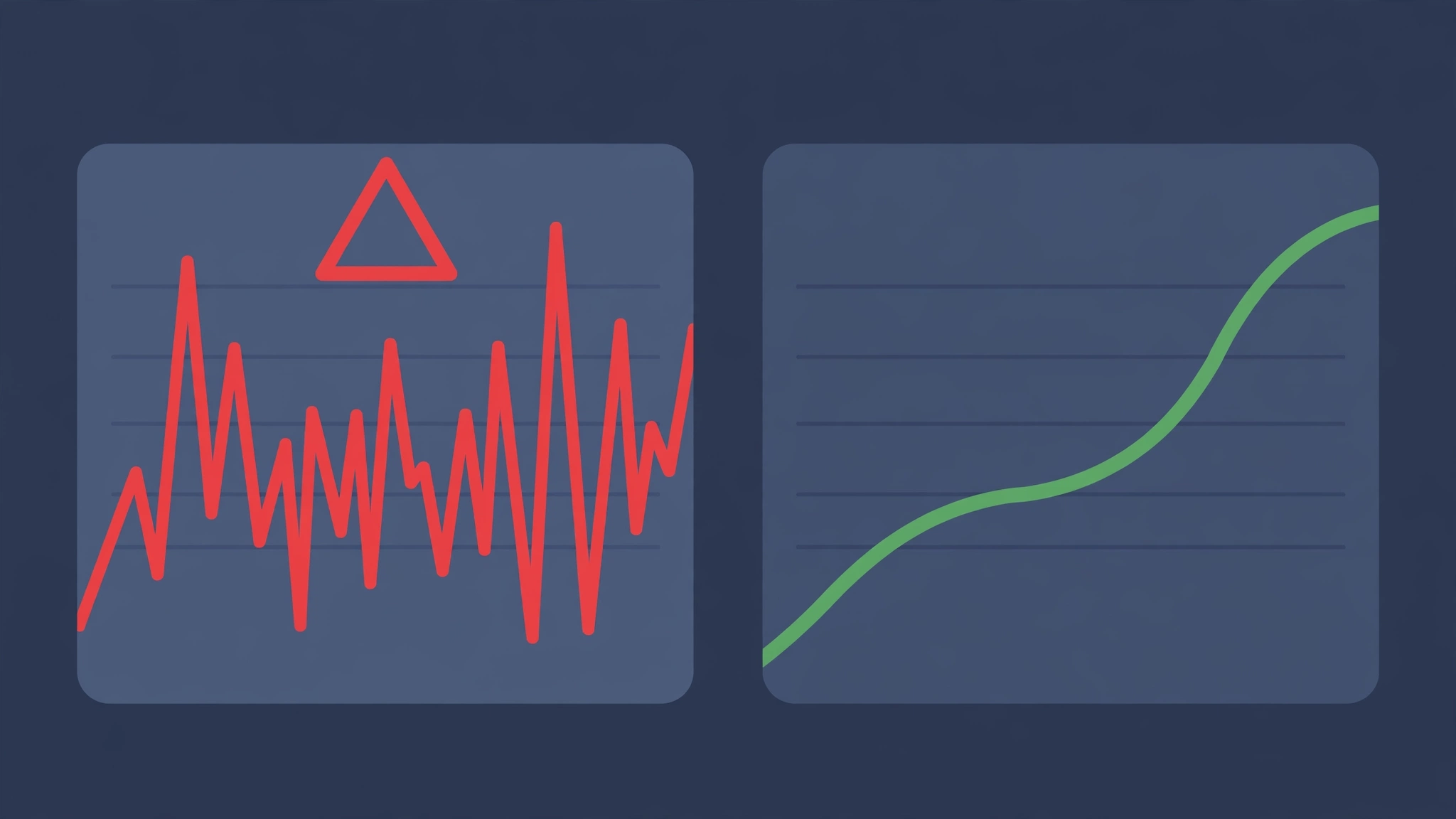
This is why experienced buyers think in terms of link velocity rather than raw counts. Velocity is simply the rate at which you acquire new backlinks over time. Safe velocity mimics how real websites earn links: slowly at first, then faster as the site gains authority, visibility, and content worth linking to. Dangerous velocity looks like a switch was flipped — zero to sixty overnight, then back to zero.
The good news: once you understand velocity, deciding on safe backlinks per month becomes straightforward. You match your pace to your site’s age, authority, and niche — and you keep that pace steady instead of pulsing it in bursts. Get your backlinks per month pace right, and everything else in SEO gets easier.
Backlinks Per Month: Safe Targets by Website Age
The table below gives realistic backlinks per month targets for 2026. These are not Google rules — they are contextually safe ranges based on what natural link growth looks like at each stage. The key column is not the number; it is the priority, because what matters most changes as your site matures.
| Website Stage | Safe Monthly Range | What Matters Most |
|---|---|---|
| Brand new (0–6 months) | 5–15 quality links | Topical relevance; a few great links beat many weak ones |
| Growing (6–18 months) | 15–50 quality links | Referring-domain diversity; spread links across pages |
| Established (2+ years) | 30–100+ quality links | Authority and editorial quality of placements |
| Local business site | 8–20 targeted links | Local citations and niche relevance |
| Ecommerce store | 20–60 quality links | Category and product-page coverage |
| Competitive niche (finance, legal, SaaS) | 50–150+ quality links | Matching competitor pace; quality is non-negotiable |
Notice how wide these backlinks per month ranges are. That is deliberate. A brand-new site in a quiet local niche might thrive on eight excellent links a month, while a funded SaaS startup competing nationally might need eighty. The ranges overlap because context — not the number alone — determines safety. Choose a backlinks per month target inside the range that matches your stage, and hold it steady for at least a quarter before adjusting.
One more critical distinction: these numbers refer to new referring domains (unique websites linking to you), not total backlinks. Ten links from ten different real websites are worth far more — and look far more natural — than fifty links from two directories. When you plan your monthly target, count domains, not links.

What Changes Your Safe Number
Your safe backlinks per month number is not fixed; it moves with five factors. Understanding them lets you adjust intelligently instead of following a generic range blindly.
1. Your current baseline
The strongest predictor of a safe pace is what your site already does. If your site has earned roughly twenty new referring domains per month for the last six months, then buying or building thirty next month looks like growth. Buying two hundred looks like an anomaly. Before setting any target, check your actual baseline in Google Search Console’s Links report or a backlink tool, and treat it as your anchor.
2. Your niche’s competitive intensity
Link velocity is judged relative to your neighborhood. In personal finance or online casinos, the top-ranking pages often gain dozens of referring domains monthly, so aggressive pacing looks normal. In a small B2B niche where the leader earns five links a month, your fifty-link month stands out badly. Always benchmark against the actual sites outranking you, not against generic advice.
3. Content output
Links need a plausible reason to exist. A site publishing two detailed guides a month that each earn links has a story behind its velocity. A site with three thin pages gaining forty links a month has no story — and reviewers, human or algorithmic, notice the gap. Scale your link pace with your content engine; they should grow together.
4. Link source diversity
Thirty links from thirty different types of sources (guest posts, niche edits, directories, PR mentions, forum citations) look far more natural than thirty guest-post links from thirty similar blogs. Diversity is camouflage. The more varied your acquisition methods, the higher your safe ceiling.
5. Anchor text distribution
This is the silent killer. Even a modest monthly count becomes dangerous when every link uses the exact same commercial anchor text. Natural profiles are dominated by branded, URL, and generic anchors (“click here”, “this guide”). If your anchors are 40% exact-match keywords, your safe backlinks per month number is effectively much lower than the table suggests. Anchor-text discipline is what lets you sustain a higher backlinks per month pace without tripping filters.
5 Velocity Mistakes That Trigger Google’s Filters
Even buyers with a sensible backlinks per month target get burned by how they execute. These are the five pacing mistakes that most often trigger algorithmic scrutiny or manual reviews.
Mistake 1: The launch spike
The classic error: a new site buys one hundred links in its first month to “kickstart” rankings. Google has no baseline for your site yet, so the spike becomes your baseline — and everything after looks like a drop-off. New sites should ramp up gradually over three to six months, not detonate on day one.
Mistake 2: The feast-and-famine cycle
Buying sixty links in January, zero in February and March, then eighty in April creates a sawtooth pattern that screams automation. Real link earning is noisy but roughly continuous. If your budget is lumpy, smooth it: buy a steady backlinks per month number instead of quarterly blasts.
Mistake 3: Single-page concentration
Pointing all of this month’s links at one money page while the rest of the site earns nothing is a bright red flag. Natural authority spreads. Distribute each month’s links across your homepage, key service pages, and a few strong content pieces — roughly in proportion to each page’s importance.
Mistake 4: Ignoring link decay
Links die. Sites close, pages get pruned, webmasters remove placements — typical decay runs 5–10% per year. Buyers who hit their monthly number but ignore decay slowly shrink in net terms. Audit quarterly, replace lost links, and prefer sellers with permanence guarantees.
Mistake 5: Velocity without relevance
Speed amplifies every other sin. Fifty fast links from topically relevant, trafficked sites is a campaign. Fifty fast links from random general blogs is a footprint. If you are going to move quickly, your quality bar must move up with your pace, not down.
How to Pace Bought Links Like a Natural Profile
Here is the practical framework. If you are buying links (guest posts, niche edits, or both), plan your backlinks per month like a media calendar, not a shopping spree.
Step 1: Establish your baseline. Count new referring domains per month for the last three to six months. That number — not a guru’s recommendation — is your starting pace.
Step 2: Set a ramp, not a jump. Increase by roughly 20–30% per month until you reach your target range. A site at ten links a month goes to thirteen, then seventeen, then twenty-two. Smooth curves beat stair-steps.
Step 3: Split across tactics and pages. A natural-looking month might be 40% guest posts, 30% niche edits, 20% editorial/PR mentions, and 10% directories or citations — spread across four to six target pages. Our niche edits vs guest posts comparison breaks down how to split the two paid tactics for maximum natural appearance.
Step 4: Vary your anchors deliberately. Before the month starts, assign anchor types: roughly half branded or URL, a quarter generic or long-tail phrases, and only a quarter partial or exact match. Write it down. Anchor discipline is what separates buyers who rank for years from buyers who get filtered.
Step 5: Monitor monthly, adjust quarterly. Check new referring domains in Search Console at month’s end. If a spike happened (a piece of content went semi-viral, a PR hit landed), reduce bought links that month to keep total velocity smooth. Total velocity is what matters — earned plus bought. Your backlinks per month total counts earned plus bought links, so adjust spending to keep the combined number smooth.
If you are new to buying links entirely, read our guide on whether buying backlinks is safe before spending anything — pacing only works when the underlying placements are on real, vetted sites. And remember that Google’s spam policies treat large-scale link schemes as violations regardless of how smoothly you pace them; velocity management reduces risk, it does not legitimize spam.
FAQs
How many backlinks per month is safe for a brand-new website?
For a site under six months old, 5–15 quality links per month is the safe zone, with many experts recommending as few as 5–10 total in the very first month. Your site has zero trust history with Google, so restraint matters more than volume. Focus on a handful of topically relevant placements and let your baseline establish itself before ramping up.
Is it safe to build 10 backlinks per day?
For an established site with existing authority, ten quality links a day can be fine — large brands earn that naturally. For a new or small site, it is far too fast and will look automated. The safer question is not per-day but per-month: does your total monthly pace resemble your site’s history and your niche’s norms? If yes, daily distribution barely matters.
What is link velocity and why does it matter?
Link velocity is the rate at which your site gains new backlinks over time. It matters because Google’s systems use it to detect manipulation: sudden, unexplained spikes in velocity are a classic footprint of link schemes, while smooth, gradually increasing velocity resembles natural editorial earning. Managing velocity is managing how “earned” your profile looks.
Can building too many backlinks too fast get you penalized?
Yes. Extreme spikes can trigger algorithmic link-spam filters that silently devalue the links, and in egregious cases a manual reviewer may apply a penalty. The more common outcome is quieter: the links simply stop counting, so you paid for placements that produce zero ranking benefit. Either way, the money is wasted.
How do I check my current link velocity?
Use Google Search Console’s Links report to see your top linking sites and linked pages, and export the data monthly to track new referring domains over time. For deeper history and competitor benchmarking, a dedicated backlink tool like Ahrefs or Semrush shows new-versus-lost links on a timeline. Watch for sudden spikes — those are the patterns to smooth out before they distort your backlinks per month baseline.
If I stop building links for a month, will my rankings drop?
Almost certainly not immediately. Rankings respond to link velocity over months, not weeks. But if your competitors keep building while you pause for a quarter or more, you can slowly lose ground as their authority compounds past yours. Consistency beats intensity: a modest steady pace outperforms bursts followed by silence.
The Bottom Line: Pace Is a Strategy, Not a Number
There is no universal safe number of backlinks per month — only a safe number for your site, in your niche, at your stage. Start from your baseline, ramp gradually, diversify sources and anchors, spread links across pages, and monitor monthly. Revisit your backlinks per month target quarterly as your baseline grows. Do that, and your link building looks like what it should be: a growing site earning growing attention.
Ready to build at a pace your rankings can actually sustain? Our marketplace lists vetted websites with verified traffic data, so every placement you buy starts from quality — the one variable that makes any pace safer. Browse vetted link opportunities →