
Learning how to choose a link building service is one of the highest-stakes buying decisions in SEO. A good vendor compounds your authority month after month; a bad one sells you links that Google quietly ignores — or, worse, links that poison your profile long after the invoice is paid. In 2026, the market is flooded with providers that look professional on the surface: slick dashboards, impressive Domain Rating numbers, and testimonials that fall apart under five minutes of scrutiny.
This guide is written for the link buyer — the marketer, founder, or agency owner about to spend real money on placements. It covers the evaluation basics, then goes further: 10 red flags most buyers miss, a 20-minute pre-purchase vendor audit, 2026 pricing benchmarks by link type, and a scored vendor scorecard for comparing candidates objectively.
Why the Wrong Link Building Service Costs More Than You Think
Most buyers price a bad vendor at “money wasted.” That is only the first cost. Low-quality placements carry three hidden costs that dwarf the invoice:
- Silent devaluation. Google’s spam-detection systems have grown far better at identifying manufactured link patterns. Many junk links are not penalized outright — they are simply discounted to zero value. You pay, the link goes live, and nothing happens to your rankings. This is the most common outcome of cheap link building, and the hardest to diagnose because there is no warning in Search Console.
- Cleanup liability. If a vendor places your links on networks that later get deindexed or penalized, those links sit in your backlink profile indefinitely. Auditing and disavowing a tainted profile costs far more than the original campaign.
- Opportunity cost. Every month spent on placements that move nothing is a month your competitors spent on links that actually rank. Link building is slow by nature — placements typically need weeks to months before they influence rankings — so a wasted quarter is a real setback.
That is why knowing how to choose a link building service matters more than finding the lowest quote. The question is not “how many links do I get?” but “what survives, what compounds, and what can I verify?”
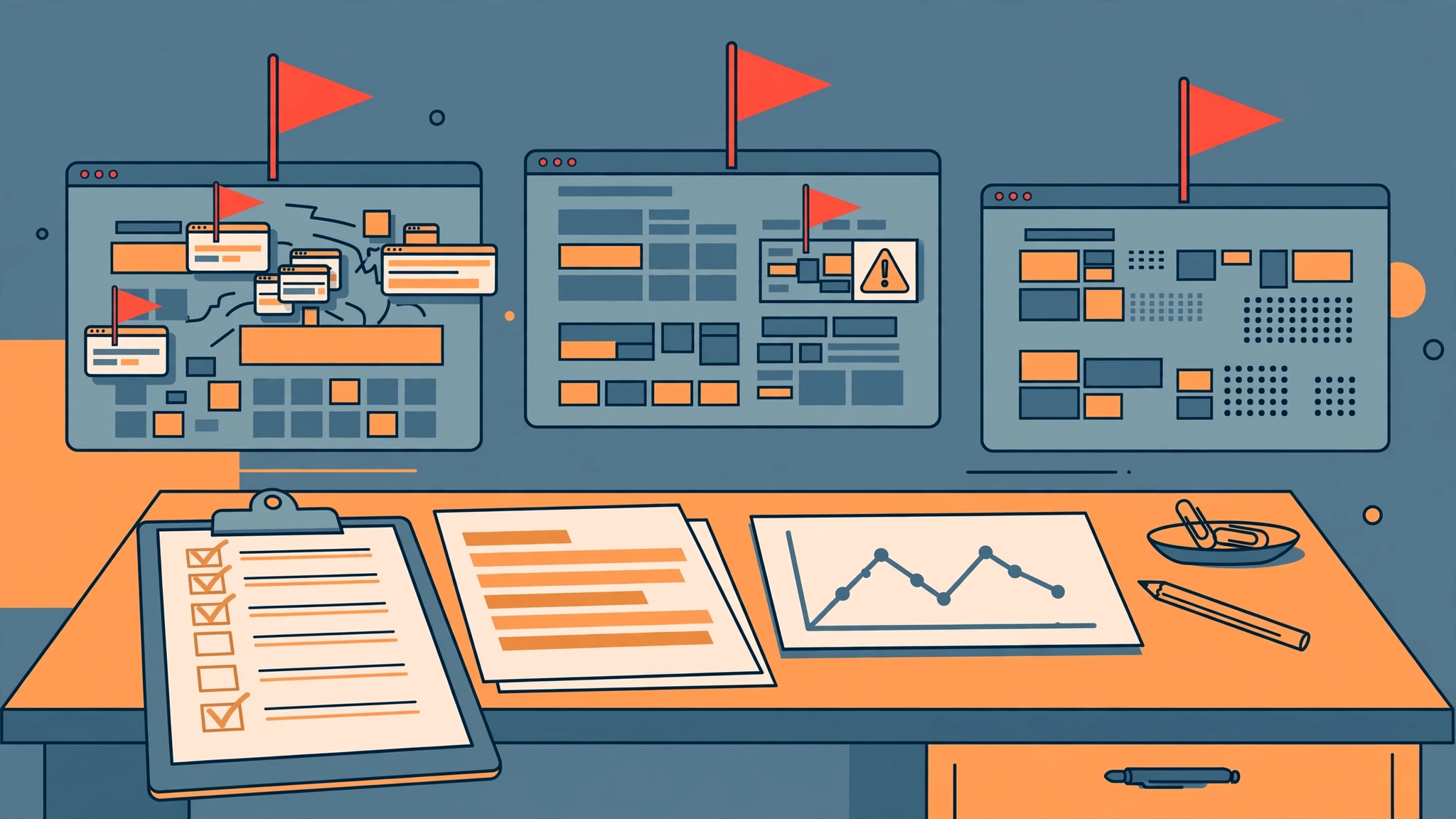
How to Choose a Link Building Service: 10 Red Flags Buyers Miss
The flags below are the ones that slip past even experienced buyers — subtle signals separating legitimate outreach operations from link-selling inventory dressed up as strategy. Keep this list open while you learn how to choose a link building service — it doubles as a screening checklist.
1. They Sell on DR Alone, Never on Relevance
The pitch revolves around Domain Rating tiers — DR 50, DR 70, DR 80+ — with no discussion of which pages or topics your links will sit on. This is the single most expensive habit in link buying. A high-DR placement on an irrelevant page consistently underperforms a mid-tier placement inside a topic-matched article. Ask the vendor to show you two placements from your niche, not two DR numbers. If they cannot produce niche-relevant examples, their “DR 70 network” is irrelevant to your rankings — a core lesson in how to choose a link building service by relevance, not vanity metrics.
2. No Sample URLs Before You Sign
“We’ll show you inventory after onboarding” is a walk-away signal, no matter how polished the sales deck. Legitimate providers can always show anonymized or sample placements before payment — the placements already exist. Vendors hiding their inventory are usually hiding sites that would not survive inspection — or they have no inventory yet and source it after you pay, when quality control is gone. Any serious guide on how to choose a link building service puts this check first.
3. Their “Guest Posts” Are Actually Sidebar or Bio Links
This is a bait-and-switch many buyers never catch. You pay guest-post prices, but the link lands in an author bio box, a sidebar widget, or a footer credit — placement types that carry a fraction of an in-content editorial link’s value. Before paying, ask explicitly: “Will my link appear inside the article body, and will I receive the live URL?” Then verify it when the link goes live. A true guest post is a full, original article with your link integrated contextually into the text.
4. The Publisher’s Traffic Comes From Link Buyers, Not Searchers
Here is a check most buyers skip: look at where the publisher’s own traffic comes from. Link-selling sites often reveal themselves through referral-heavy traffic, or organic traffic concentrated on a handful of keywords they clearly do not target naturally. A site that ranks for nothing in its supposed niche but has a DR of 60 got that DR from other paid links. Check the site’s organic traffic and top keywords in any SEO tool before approving a placement — run this traffic check every time you evaluate how to choose a link building service for a new niche.
5. The DR Is Inflated by Paid-Link Loops
Related to the last flag, but worth its own check: some publisher sites have DR propped up by links from other link-selling sites in a circular network. Spot it by opening the publisher’s backlink profile: if the domains linking to it are generic, multi-topic “write for us” blogs, the DR is manufactured. One genuine editorial link to a site is worth more than a hundred links inside a paid-link merry-go-round.
6. Posts Are Published but Never Indexed
A link on a page Google never indexes passes nothing. Some vendors report “live” links on pages that sit orphaned — no internal links from the site, no sitemap entry, no crawl. When a placement goes live, paste its URL into Google’s URL Inspection tool (or check with a site: search) and confirm it is actually indexed. Make indexing verification a written contract term, not a favor you ask for later — it is non-negotiable when you are learning how to choose a link building service.
7. Bulk Discount Ladders That Reward Volume Over Quality
“Buy 50 links, get 20% off — buy 100, get 35% off.” Real editorial outreach does not scale this way. Each placement requires prospecting, pitching, writing, and editorial review; the marginal cost of the 100th link is roughly the same as the 10th. Steep volume discounts are only possible when quality degrades at scale — thinner content, looser relevance screening, recycled site lists. Flat per-link pricing with transparent tiers is a far healthier sign than a discount ladder. Remember this pricing signal whenever you compare how to choose a link building service across vendors.
8. Guaranteed Rankings or Guaranteed DR Within a Fixed Timeframe
No honest provider controls Google’s algorithm, and none can promise a position or a metric by a date. This one is famous, but buyers still fall for its subtler forms: “we guarantee DR 50+ placements” or “top 3 within 90 days.” The guarantee itself is the tell — it signals either dishonesty or a misunderstanding of how search works, and learning how to choose a link building service starts with spotting it. What a good vendor can guarantee: placement type, site quality standards, turnaround ranges, and a replacement policy.
9. No Replacement or Refund Policy in Writing
Links get removed. Publishers take pages down, sites change ownership, editorial standards shift. Industry-standard coverage is a 6–12 month replacement guarantee for lost links. If the vendor’s policy is verbal, vague, or absent from the contract, you are buying links with no durability. Ask: “What exactly happens, in writing, if a link is removed in month four?” The quality of that answer predicts the quality of the service.
10. Reporting Is Screenshots, Not Auditable Live URLs
A monthly PDF or a handful of screenshots is not reporting — it is a summary you cannot verify. Professional reporting means a live sheet or dashboard with the placement URL, anchor text, target page, publisher metrics, and publication date for every link. Screenshots can be staged; live URLs cannot — another basic test of how to choose a link building service with confidence.

The 20-Minute Pre-Purchase Vendor Audit
Before you sign anything, run this 20-minute audit on any link building service you are seriously considering. If you are still learning how to choose a link building service, this is the fastest way to catch nearly everything the sales process hides:
- Demand five sample placements — from the last 90 days, ideally in or near your niche. Not their best five ever; their recent five.
- Check each host site’s organic traffic. A site with near-zero organic traffic and a healthy DR is a link-selling site. Real publications rank for real keywords.
- Skim the host site’s backlink profile. If its referring domains are mostly other multi-topic guest-post farms, the site’s authority is manufactured.
- Read one sample article end to end. If it reads like filler written only to host links — generic, thin, stuffed with unrelated outbound links — the placement carries little durable value.
- Check the host site’s outbound link neighborhood. If the page links to essay mills, crypto casinos, or adult content alongside your niche, you are buying into a bad neighborhood.
- Verify one sample link is indexed. A site: search on the host domain plus the article slug takes thirty seconds.
- Ask the three walk-away questions: “Can I approve sites before placement?” “What is the replacement policy, in writing?” “Exactly what ships in month one, and who does it?” Two fumbles and you walk.
Five placements are enough to run this audit. A vendor confident in their inventory will welcome it; a vendor who stalls is answering your question. That response alone teaches you how to choose a link building service: pick the one that welcomes scrutiny.
What Link Building Services Actually Cost in 2026
When evaluating how to choose a link building service, pricing tells you what you are buying more honestly than any sales page. Here are realistic 2026 market ranges by placement type:
| Placement type | Realistic price range | What you are actually buying |
|---|---|---|
| Guest post, low-tier site | $100–$250 | Legitimate but small publications; fine for supporting links |
| Guest post, mid-tier site | $250–$600 | Real sites with organic traffic; the workhorse of most campaigns |
| Guest post, premium editorial site | $600–$1,500+ | Established publications with editorial standards; slow, worth it |
| Niche edit / link insertion | $150–$500 | Link added to an existing indexed page; faster, relevance is critical |
| Digital PR placement | $800–$2,000+ | Earned media via data or stories; unpredictable but high-authority |
See our guide to how much guest posts cost in 2026 for pricing by DR tier, and read our honest answer to whether buying backlinks is safe in 2026 before committing budget — it frames the risk side of every pricing decision, and it is essential context for how to choose a link building service on a realistic budget.
The Trial-Order Playbook: Test Before You Commit
Never start with a large order. The professional way to decide how to choose a link building service for a long-term engagement is a small, controlled pilot:
- Start with 2–3 placements on pages you choose, with anchors you approve.
- Evaluate three things: content quality (read it), relevance (would a human reader expect this link here?), and indexing (confirm it within two weeks).
- Monitor for 30–60 days. Check that the links stay live, that the pages stay indexed, and that reporting matches reality.
- Scale only if the pilot validates. Increase order size gradually; a vendor that delivered well at 3 links may degrade at 30 — watch for it.
This small pilot is the single most reliable step in how to choose a link building service: a few hundred dollars that protects budgets measured in thousands — and reveals how the vendor communicates, moves, and handles hiccups.
A Vendor Scorecard for Comparing Candidates
When you are down to two or three finalists and deciding how to choose a link building service between them, score each one from 0 (absent) to 2 (strong) on these criteria:
| Criterion | What “2” looks like |
|---|---|
| Sample URLs before payment | Recent, niche-relevant placements shared upfront |
| Relevance over metrics | They discuss topical fit before DR numbers |
| Content standards | Native-level writers, editorial review, samples in your niche |
| Anchor text policy | Pricing transparency |
| Turnaround honesty | Ranges in weeks, never same-day “editorial” delivery |
| Reporting depth | Live URLs, anchors, metrics, dates — auditable |
| Replacement policy | 6–12 month written coverage for lost links |
| Niche experience | Placements in your vertical within the last 90 days |
| Risk posture | Open about pacing, velocity, and Google’s spam policies |
A vendor scoring 16+ is a strong candidate; below 10, keep looking. Use the total as your tiebreaker when weighing how to choose a link building service among finalists. The Google Search spam policies are worth one read — legitimate vendors’ practices map cleanly to them.
FAQs
How much should I pay for a link building service?
Realistic 2026 ranges: $200–$500 per link for mid-tier editorial sites, $600–$1,500+ for premium publications, with monthly retainers typically running $1,000–$5,000. Below roughly $200 per placement, a vendor cannot cover real outreach, writing, and publisher fees — so use these ranges as a quick pricing test for how to choose a link building service.
What questions should I ask a link building agency before hiring?
Ask for sample placements before signing, how they match publishers to your niche, who writes the content, what their anchor text policy is, what reporting looks like, and what the written replacement policy covers. Their comfort with these questions tells you more than any case study — it is the fastest version of how to choose a link building service under pressure.
Can I trust cheap link building services?
Generally no. Ultra-cheap services ($20–$75 per link) almost always rely on PBNs, link farms, or sites that exist solely to sell links. These placements are typically discounted to zero ranking value by Google’s spam systems and can leave toxic footprints in your backlink profile. Cheap links are the most expensive kind.
How do I know if a link building service’s placements are real?
Verify three things: the host site has genuine organic traffic (check in any SEO tool), the page hosting your link is indexed by Google, and the site’s own backlink profile is not just other link-selling sites. A real placement sits inside a topic-matched article on a site that ranks for its own keywords.
How long does it take to see results from link building?
Expect placements to start going live within a few weeks of a campaign’s start, with measurable ranking movement typically following after the links have been live for several weeks to a few months. Timelines depend on your site’s existing authority and niche competition. Any vendor promising rankings inside 30 days is selling something other than editorial links.
Is buying backlinks safe in 2026?
It can be, when placements are editorial, relevant, and naturally integrated into quality content — but Google’s spam policies are explicit that buying links to pass ranking credit violates its guidelines. The safest approach is buying placements that would be defensible as marketing: real sites, real readers, real content. That is the short version of how to choose a link building service safely.
Knowing how to choose a link building service is a skill, not a purchase — and now you have the buyer’s toolkit: the ten red flags most buyers miss, a twenty-minute audit, honest pricing benchmarks, and a scorecard that turns a sales pitch into a number. Keep practicing how to choose a link building service with this checklist on every purchase. Use them before you spend a dollar, and the links you buy will be the kind that compound. That is how to choose a link building service like a professional buyer.