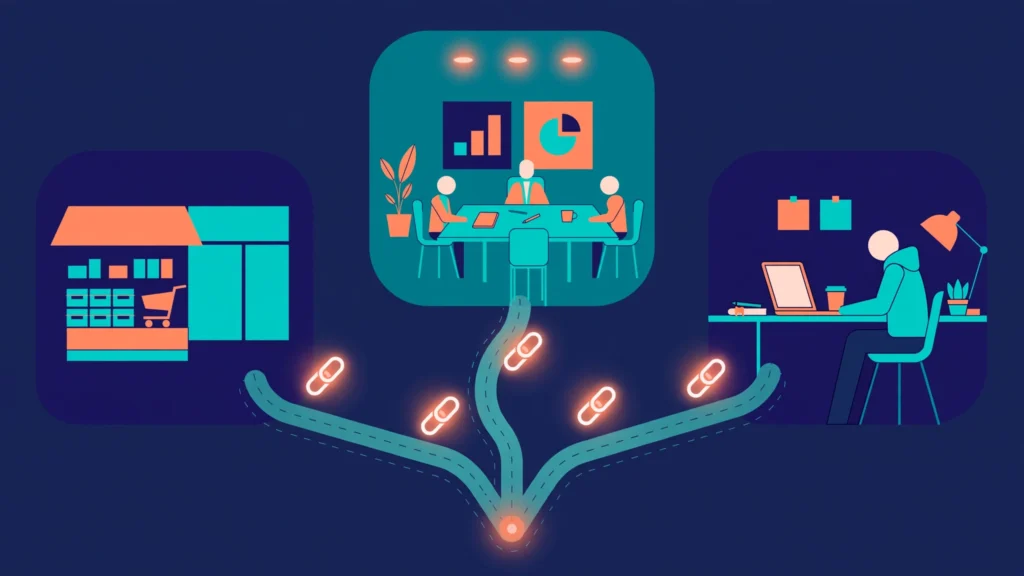
If you are wondering where to buy backlinks in 2026, you have probably noticed something confusing: every guide lists a dozen vendors, yet almost nobody explains how the actual buying channels differ. The real decision is not which vendor to pick first — it is which channel to buy through. Backlink marketplaces, link building agencies, and freelancers are three completely different ways to acquire links, each with its own pricing logic, risk profile, and workload. This guide compares all three so you can pick the right one for your budget, skill level, and timeline.
Most buyers make the same mistake: they shop by brand instead of by channel fit. A marketplace buyer needs vetting skills. An agency buyer needs budget and trust. A freelancer buyer needs patience and a strict test protocol. Choose the wrong channel and even a reputable vendor will disappoint you. Choose the right one and even a modest budget produces measurable movement. Before deciding where to buy backlinks for your site, read this comparison first — it will save you more money than any vendor recommendation.
That framing matters: deciding where to buy backlinks by channel first, and vendor second, is the fastest way to avoid mismatched expectations and wasted spend.
Where to Buy Backlinks: The Three Channels Compared
When researching where to buy backlinks, remember that every paid-link transaction in 2026 flows through one of three channels. Understanding each channel’s mechanics matters more than memorizing vendor lists, because the channel determines how much control you keep, what you pay for convenience, and who is accountable when a link drops or a site turns out to be a dud.
1. Backlink Marketplaces: The Self-Service Option
Marketplaces such as INSERT.LINK, Adsy, Collaborator, WhitePress, and PressWhizz are the closest thing to a supermarket for links. You search a catalog of publisher sites, filter by metrics like DR, organic traffic, country, and niche, see the price up front, and order a guest post or niche edit with a few clicks. The transaction is transparent, fast, and in your hands.
Strengths:
- Full transparency before you pay — you see the site, the metrics, and the price.
- No retainers or contracts; you pay per placement, which suits variable budgets.
- You control the publisher, the anchor text, and the target page on every single order.
- Fast turnaround, often measured in days rather than weeks.
Weaknesses:
- You do all the vetting yourself. Displayed metrics can mislead — a DR70 site with 200 monthly visitors is a zombie, not an authority.
- Markups are baked into listings, and the same publisher may appear on several marketplaces at different prices.
- Everyone buys from the same pool, so over-reliance on one marketplace creates a footprint.
- Replacement and refund policies vary by listing, so you must read the terms before checkout.
For buyers deciding where to buy backlinks with maximum control, marketplaces suit those who already know how to evaluate a site’s real organic traffic, topical relevance, and outbound-link profile. If you can open a publisher’s actual page and judge the surrounding content quality yourself, a marketplace gives you the most link for your dollar.
2. Link Building Agencies: The Hands-Off Option
Agencies such as Editorial.Link, uSERP, LinkBuilder.io, and Authority Builders sell a managed service rather than a catalog. You brief them on target pages and goals; they handle prospecting, outreach, content creation, and placement. Some operate like marketplaces with an outreach layer bolted on, while premium ones do genuine manual outreach and digital PR that earns coverage no marketplace lists.
Strengths:
- Zero legwork — prospecting, content, and publisher communication are done for you.
- The best agencies pre-approve prospects before any content is written.
- Managed processes produce consistent, reportable delivery — ideal for client work and white-label resale.
- Premium outreach can earn editorial placements that money alone cannot buy from a catalog.
Weaknesses:
- Significantly higher cost per link — you pay for labor, expertise, and account management.
- Less control over the exact publishers unless you set strict approval criteria up front.
- Some agencies quietly buy from the same marketplaces you could access yourself, then add a 3–5x markup — always ask where their placements actually come from.
- Campaigns take weeks, not days, because real outreach cannot be rushed.
Agencies suit brands and SEOs who value their time over per-link savings, and anyone who needs a repeatable process — especially agencies reselling links to clients. If you are deciding where to buy backlinks for client campaigns, the reporting and consistency of a managed service often justify the premium.
3. Freelancers: The Bargain Bin (and Occasional Goldmine)
Freelance platforms like Legiit, Fiverr, and Upwork connect you with individual sellers offering link services. Prices start as low as a few dollars, and quality varies more here than anywhere else — the range runs from genuine outreach specialists to sellers flipping the same PBN lists to hundreds of buyers.
Strengths:
- The lowest entry prices anywhere — ideal for small tests and supporting-tier links.
- Seller reviews and order histories are visible, so you can compare track records.
- You can build direct relationships with good sellers and negotiate long-term deals.
Weaknesses:
- Quality tracks the individual seller, not the platform. A great seller and a scammer can look identical at a glance.
- Little transparency about the actual publishing sites before you order — many sellers refuse to share samples.
- No platform-level guarantees; protection depends entirely on each seller’s terms.
- Requires the most vetting effort per dollar saved, which eats the price advantage.
Freelancers suit buyers with more time than money who will enforce a disciplined test-order protocol. Never point first-time freelancer links at your money pages — test on supporting pages, verify results in your backlink tool, then scale.
Marketplaces vs Agencies vs Freelancers: Head-to-Head
Here is the side-by-side view most vendor roundups skip — the channel, not the brand, shapes your experience:
| Factor | Marketplaces | Agencies | Freelancers |
|---|---|---|---|
| Typical cost per link | $30–$300 (publisher-set) | $150–$500+ (managed) | $5–$150 (seller-set) |
| Control over publishers | High — you pick every site | Low to medium — depends on the provider | Medium — varies by seller |
| Your time investment | Medium (vetting each prospect) | Low (briefing only) | High (testing and managing sellers) |
| Turnaround | Days | Weeks | Days to weeks |
| Replacement cover | Varies by listing | Usually campaign-based | Seller-dependent |
| Biggest risk | Footprint from the shared pool | Paying 3–5x markup on marketplace links | PBNs and scam sellers |
| Best for | Skilled buyers who want control | Brands, agencies, time-poor buyers | Budget buyers with vetting discipline |
Keep this table bookmarked the next time someone asks where to buy backlinks — channel fit predicts the outcome better than any single vendor review.
How Much Do Backlinks Cost per Channel in 2026?
Published 2026 data puts decent niche placements at roughly $100–$300, with premium editorial links starting around $375. But sticker price is only part of the story — the true cost of deciding where to buy backlinks includes your vetting time, platform markups, and the risk of paying for replacements. Here is the full picture:
| Cost component | Marketplaces | Agencies | Freelancers |
|---|---|---|---|
| Sticker price per link | $30–$300 typical | $150–$500+ | $5–$150 |
| Your vetting time | 1–2 hours per batch | Near zero | 2–4 hours per seller test |
| Hidden markups | Marketplace margin baked into listings | 3–5x possible on resold placements | Platform fees on some sites |
| Link replacement terms | Varies by listing — confirm first | Campaign-based — get it in writing | Seller-dependent — often none |
A $100 marketplace link you vetted in 30 minutes is often cheaper in real terms than a $60 freelancer link that cost you three hours of testing. Track your hours, not just your spend — most buyers who complain about “expensive” links are ignoring the cheapest input of all: their own time. For a deeper breakdown of what drives guest post pricing specifically, see our 2026 guest post cost guide.
Put simply, the real answer to where to buy backlinks is not the cheapest sticker price — it is the channel with the lowest total cost once your vetting time and replacement risk are counted.
Which Channel Fits Your Situation?
Use this decision framework when choosing where to buy backlinks, instead of shopping by brand name:
- Choose a marketplace if you can independently verify a site’s traffic, relevance, and content quality — and you want maximum control over anchors and publishers. Best for experienced SEOs and agencies running multiple campaigns.
- Choose an agency if your time is worth more than the markup, you need consistent monthly delivery, or you are buying links for clients. Demand pre-approval of prospects and written replacement terms before signing.
- Choose freelancers if your budget is tight, you are building supporting-tier links, and you will enforce a strict test-before-scale protocol. Never use untested sellers for links you cannot afford to lose.
Beginners should start with a marketplace’s most transparent listings — where real traffic data is visible — rather than the cheapest freelancer gig. Transparency is the training wheels of link buying: it shows you what a good placement looks like before you gamble on opaque sellers.
When a client asks where to buy backlinks for a brand-new domain, point them at this framework first — the right channel choice beats the right vendor choice almost every time.
Vetting Checklist: What to Verify Before You Pay
No matter where you buy backlinks, run every prospect through these checks. The channel changes who does the work, not whether the work gets done:
- Real organic traffic: open the site in Ahrefs or SEMrush. A high DR with a few hundred monthly visitors is a red flag — Google rewards real properties, not metric-inflated corpses.
- Topical relevance: the linking page should sit in or adjacent to your niche. Irrelevant links are weaker and leave a footprint.
- Content quality: read the publisher’s recent articles. Spun, thin, or low-effort content signals a site built for selling links rather than serving readers.
- Outbound-link behavior: if the site links out to casinos, pharma, and payday loans on every post, your link inherits that neighborhood.
- Indexation: verify that the site’s recent posts are actually indexed in Google — unindexed pages pass no value.
- Replacement policy: get in writing what happens if the link is removed. Marketplaces vary by listing, agencies by contract, freelancers by seller.
Channel-specific red flags: on marketplaces, watch for the same publisher listed at wildly different prices — shop around instead of overpaying. With agencies, watch for refusal to name publishers before payment — you may be buying marked-up marketplace links. With freelancers, watch for sellers who will not share live samples from recent orders — walk away immediately.
The Hybrid Strategy: Mix Channels Like a Pro
Here is what experienced buyers actually do in 2026: they do not marry one channel. They assign each channel the job it does best, because knowing where to buy backlinks is only half the skill — knowing how to combine sources is the other half.
- Money pages → marketplaces or premium agencies. Your most important commercial pages deserve placements you fully vetted yourself or premium editorial outreach. This is where control matters most.
- Supporting content → managed mid-tier vendors. Blog posts and informational pages can take solid mid-range placements where cost-efficiency matters more than prestige.
- Link diversity → vetted freelancers. Once you find two or three reliable sellers through testing, use them for tier-two links and profile diversity — the supporting links that make a profile look natural.
- Brand signals → press releases and sponsorships. These build entity recognition and trust signals rather than raw ranking power — point them at your homepage or a neutral hub page, never at money pages with commercial anchors.
The 3-seller test protocol: before scaling with any new vendor — in any channel — buy one small link from three different sellers, compare page quality, traffic, surrounding content, and indexation speed, then scale only with the winner. Keep a spreadsheet of seller, price, URL, delivery date, and result. This single habit eliminates most bad buys, and it is the step almost every burned buyer admits they skipped.
Run this protocol every time you test a new source for where to buy backlinks, and most bad buys disappear before they cost you a cent.
Finally, spread purchases across channels and time. A natural link profile grows steadily with varied sources — fifty links from one marketplace in a week looks purchased; the same fifty spread across marketplaces, direct deals, and editorial outreach over two months looks earned.

Buying Backlinks Safely in 2026
Let us be direct about where to buy backlinks safely: Google’s spam policies classify buying or selling links intended to influence rankings as link spam. That has not changed in 2026, and no vendor can sell you a guarantee otherwise. Paid links used for advertising or sponsorship are acceptable when they carry rel=”sponsored” or rel=”nofollow” attributes.
That said, risk is a spectrum, not a switch. It drops sharply when your links are topically relevant, sit on real sites with genuine organic traffic, use natural anchor-text distribution, and arrive as part of a modest, steady campaign rather than a bulk blast. We cover the full risk picture in our guide on whether buying backlinks is safe.
Three safety rules apply to every channel: never buy bulk packages (“50 links for $99” is spam by definition), never let one channel or vendor dominate your profile, and never point your riskiest links at pages your business depends on. For independent 2026 data on provider pricing and policies, the best places to buy backlinks comparison and the 2026 backlink buying playbook are both worth reading.
FAQs
Is it safe to buy backlinks in 2026?
It is never completely safe, because Google classifies paid links intended to influence rankings as link spam. Risk drops considerably when links are relevant, placed on real sites with genuine organic traffic, and acquired gradually. A steady, modest campaign on quality sites carries far less risk than bulk packages from unknown sellers.
How much does a good backlink cost in 2026?
Published 2026 data puts decent niche placements at roughly $100–$300, with premium editorial links starting around $375. Freelancer links can run $5–$150 but demand heavy vetting. Remember that sticker price is not the full cost — always add your vetting time and the chance of paying for replacements when comparing channels.
Are cheap backlinks worth buying?
Sometimes, as supporting-tier links on real, relevant sites. A $20 link on a genuine small niche blog can add useful diversity to your profile. But very cheap bulk offers — “50 links for $99” — are almost always spam, PBNs, or auto-generated placements that waste money and can attract penalties. Price alone never proves quality.
Where can I buy backlinks online?
You can buy backlinks through link marketplaces (self-service publisher catalogs), managed link building agencies (hands-off outreach), and freelance platforms (individual sellers). Marketplaces give you the most visibility into the publisher before you pay, agencies remove the workload entirely, and freelancers offer the lowest prices with the widest quality variance.
How many backlinks should I buy?
There is no fixed number. Start with a few placements per month, monitor ranking and traffic movement, and compare your referring-domain growth against the pages already ranking for your target keyword. Steady, gradual acquisition beats bursts — sudden velocity spikes are one of the clearest footprints of a paid campaign.
Are dofollow backlinks worth buying?
Dofollow links pass ranking credit, which is exactly why buyers want them — and why Google treats paid dofollow links as the riskiest kind. Weigh the ranking benefit against the policy risk, keep anchor text natural and varied, and consider mixing in sponsored or nofollow placements so your overall profile looks natural.
Now that you know where to buy backlinks — and more importantly, which channel fits your situation — put the strategy into practice with placements you can actually vet before you pay. Browse vetted link opportunities →