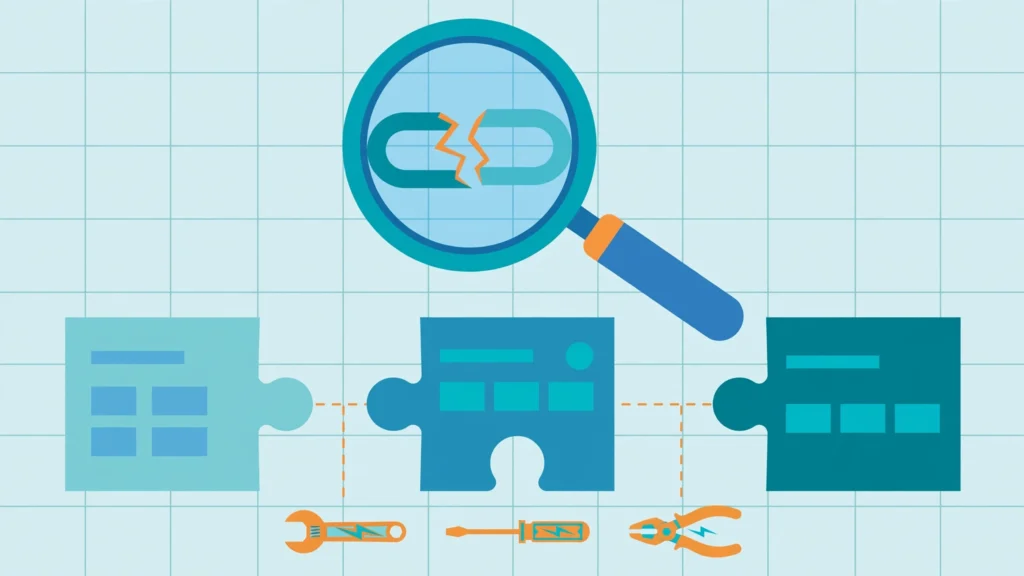
This broken link building guide is written for link buyers, not agencies. Most tutorials on this topic speak to SEOs grinding through outreach campaigns. But broken link building is equally powerful from the buyer’s side of the table: it is one of the few tactics that wins you genuine editorial links for free, and it doubles as a prospecting engine that helps you find sites willing to sell placements on friendlier terms. Below is the complete step-by-step playbook, including the exact outreach templates, follow-up cadence, and the buyer-specific angle most guides ignore.
Why This Broken Link Building Guide Matters to Link Buyers
Link buyers typically acquire placements through paid guest posts and niche edits. Those work — but they cost money on every single link, and Google’s link spam policy keeps raising the bar for what looks natural. A healthy link profile mixes paid placements with earned links. Broken link building gives you that earned layer at the cost of effort, not budget.
Here is the buyer’s edge: when you prospect for broken links, you are finding site owners who are actively maintaining their content and care about link quality. Those are precisely the sites that sell quality guest posts and niche edits. A broken-link outreach conversation that ends with a replacement link often turns into a long-term relationship — and relationships buy you better placement prices and first refusal on new inventory. Think of this broken link building guide as a two-for-one: free editorial links plus a pipeline of vetted seller contacts.
Before you spend on more paid placements, check what guest posts actually cost in 2026 so you can compare the ROI of earned links against bought ones — you will quickly see why a few hours of broken-link outreach pays for itself.
What Broken Link Building Actually Is
The mechanic is simple. Every website accumulates dead outbound links over time: pages get deleted, domains expire, companies rebrand, tools shut down. When you find a dead link on a relevant site, you notify the owner and offer your own relevant content as the replacement. You solve their problem (a broken page hurts their user experience and their own SEO), and they fix it by linking to you.
Because you are helping first and asking second, this tactic earns reply rates cold guest-post pitches cannot touch — and it is inherently white hat: you are replacing dead links, not buying or exchanging links. That makes it one of the safest tactics to run alongside paid link acquisition — which matters, because buying backlinks safely in 2026 requires your profile to look earned as well as purchased. Keep this helper-first principle front and center as you apply this broken link building guide.
Step 1: Define Your Broken Link Building Targets
Every strong broken link building guide starts with targeting, because relevance beats volume. Pick 2–4 content pillars on your site that already exist or that you are willing to create: detailed guides, tools, statistics pages, or how-to resources. Your replacement content must genuinely cover the same ground as whatever is dead — site owners spot a poor-fit swap instantly and reject it.
Next, list the linking pages you want, not just the links. The best targets are:
- Resource pages and link roundups in your niche — they exist to curate links and are refreshed often.
- High-traffic informational guides that cite external sources in their content.
- Educational sites (.edu) and government resource hubs — hard to earn links from, but broken links are one of the few doors in.
- Competitor backlink pages showing 404s — pages that once linked to your competitors and now point at nothing.
Build your prospect list from pages like these and the rest of this broken link building guide becomes straightforward.
Step 2: The Prospecting Workflow
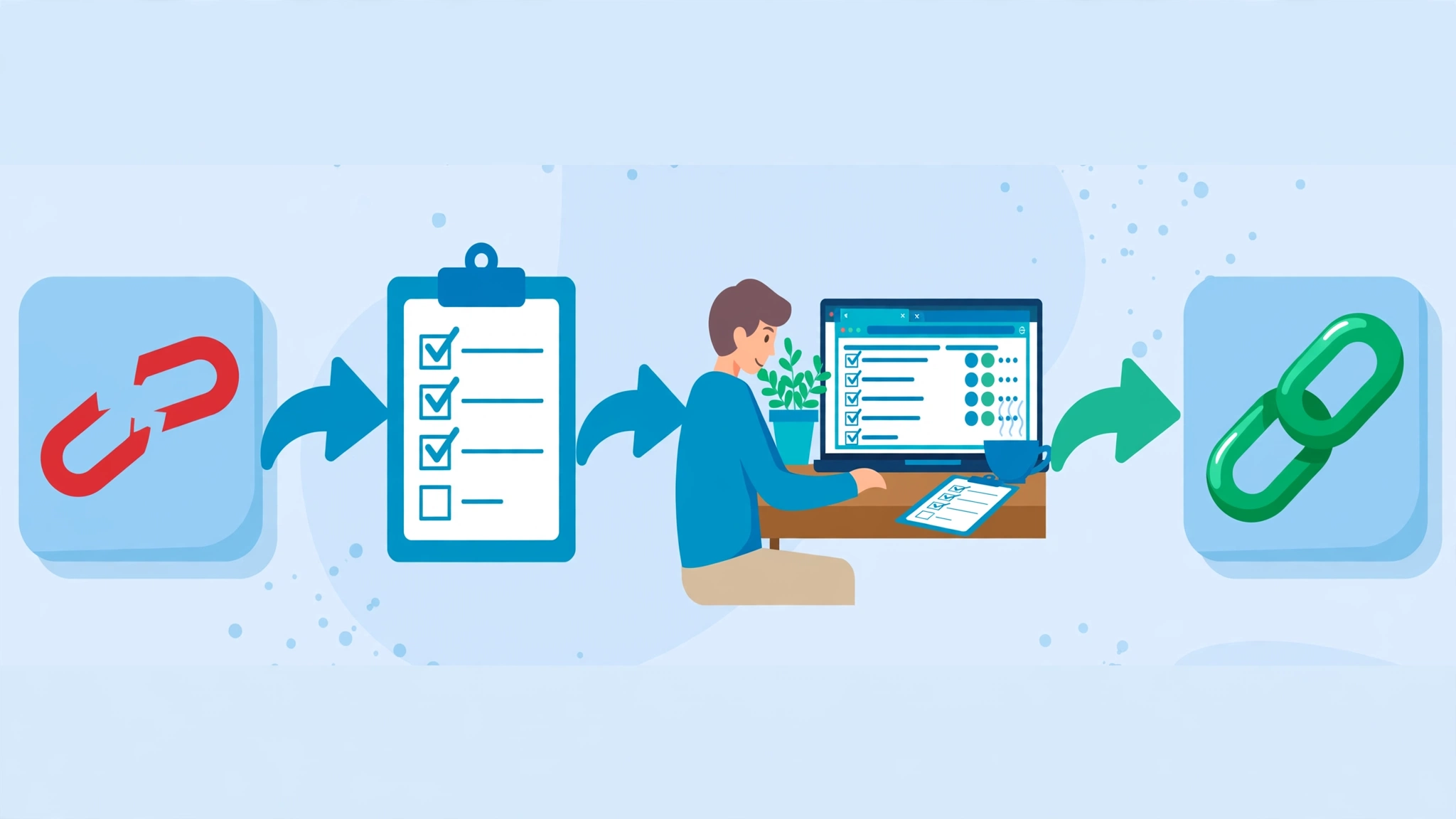
Here is the prospecting workflow this broken link building guide recommends, ordered from fastest to most advanced. You can run the first two methods with entirely free tools.
Method A: Scan resource pages with a link checker
Use Google operators to find resource pages in your niche. Examples:
[your topic] + "resources"or[your topic] + "helpful links"intitle:resources [your topic][your topic] inurl:links
Open each page and run a free broken-link checker (the Check My Links Chrome extension or the Ahrefs Broken Link Checker) over it. One resource page can hold dozens of outbound links — a single good page can yield 3–10 dead targets. Record the page URL, the dead link URL, and the anchor text.
Method B: Find competitor backlinks that 404
This is the highest-ROI method in any broken link building guide. Take a competitor’s URL in a backlink tool (Ahrefs Site Explorer has a free broken-link report) and look at their lost or broken backlinks: sites linking to pages on their domain that no longer exist. The linking sites are proven to link out on your topic, and the dead page tells you exactly what content to recreate. Rebuild it better on your site, then contact everyone linking to the dead page with: “The resource you link to in [section] has been down since [date] — we maintain a current version.”
Method C: Mine the Wayback Machine for dead gold
Some of the best opportunities in this broken link building guide are pages that exist nowhere anymore. Paste the dead URL into the Wayback Machine, read the original, then publish a genuinely superior version: updated data, clearer structure, original visuals.
Method D: Set up broken-link alerts
Set Google Alerts for [competitor brand] + 404 so you pitch fresh dead links before anyone else finds them.
Step 3: Vet Every Opportunity Before You Pitch
Vetting is the unglamorous step that makes this broken link building guide work.
Not every dead link deserves outreach. Run each prospect through this quick filter:
- Relevance: Would this link make sense to a human reader? If not, skip it — irrelevant links dilute your profile.
- Authority and traffic: Check the domain’s DR/DA and, more importantly, its organic traffic. A high-DR page with zero traffic often signals a link farm, not a real site.
- Link placement context: The dead link should sit in editorial content or a resource list, not comments or footers.
- Backlink count to the dead page: If many sites link to the same dead resource, pitch all of them — one asset can win multiple links.
Step 4: Create (or Match) the Replacement Content
Broken link building only converts when the replacement is genuinely good — the central promise of this broken link building guide. Three rules:
- Match intent, not just topic. If the dead page was a pricing study, your replacement must include pricing data — a generic overview will be rejected.
- Make it current. Fresher stats and 2026 context beat the archived version; say so in your pitch.
- Keep it linkable. Your replacement page should have one clear URL, a descriptive title, and no aggressive pop-ups that make the webmaster embarrassed to send readers there.
If you already have a matching asset, great — most buyers discover they own 3–5 pages that work as replacements immediately. If not, one solid guide per content pillar is enough to start. Quality here is a conversion multiplier: a superb replacement can convert at 15–20%, a thin one at near zero.
Step 5: The Outreach Templates
Keep every email under 120 words, personalize the first line, and lead with the broken link — not with yourself. Here are the two templates that consistently perform:
Template 1: The helpful heads-up (resource pages and guides)
Subject: Broken link on your [Page Topic] page
Hi [First Name],
I was reading your guide on [Page Title] and noticed the link to [Broken Resource Name] returns a 404 — thought you would want to know.
We recently published a current guide on the same topic ([one-line description of what it covers]), in case you need a replacement: [Your URL].
No worries either way — just wanted to flag the dead link.
Best,
[Your Name]
Template 2: The specific swap (competitor 404 method)
This second broken link building guide template trades brevity for specificity — use it when the dead page was a competitor’s asset.
Subject: Quick fix for your [Section Name] section
Hi [First Name],
In your [Article Title], the link to [Dead Page Title] in the [section] section appears to be dead — [Competitor Site] took that page down [recently / in Month Year].
We maintain an updated resource covering the same ground ([Your URL]) — it includes [one differentiator: 2026 data / step-by-step process / original examples].
Happy to write a 2–3 sentence replacement blurb if that saves you time.
Cheers,
[Your Name]
Personalize every send — recipient name, exact page title, and the broken link’s anchor text — and keep subject lines under 8 words. Template 2’s offer to write the replacement blurb meaningfully lifts acceptance rates — a small edge this broken link building guide urges you not to skip.
Step 6: The Follow-Up Sequence
Most broken-link links arrive from follow-ups, not first emails — which is why this broken link building guide dedicates a full step to the sequence. Run this cadence:
- Day 0: Initial email (Template 1 or 2).
- Day 6–7: One short nudge: “Hi [Name], just floating this back up in case the broken link on [Page] slipped through — happy to send the replacement link again.” Campaign data shows a single well-timed follow-up can lift placements by roughly a quarter.
- Day 12–14: Final check-in with an easy out: “Last note on this — if you’ve already fixed it, ignore me. Otherwise the replacement is here: [URL].”
Then stop. Two follow-ups is the ceiling; a third email burns a contact who may later become a paid-placement seller.

Step 7: Track, Measure, and Compound
Run every campaign in a simple spreadsheet with these columns: prospect URL, dead link URL, replacement URL, contact name/email, date sent, follow-up dates, reply, link live (yes/no), and notes. This is not busywork — it is how you learn which content pillars and which pitch angles convert, so each campaign beats the last.
Benchmarks to expect from a well-run campaign:
| Metric | Healthy range |
|---|---|
| Open rate | 45–65% (broken-link subject lines outperform cold pitches) |
| Reply rate | 8–15% |
| Placement conversion | 5–12% of prospects, higher for Method B |
| Links per replacement asset | 3–10 over the asset’s lifetime |
| Time to first links | 2–4 weeks from first send |
Also track relationship yield: how many outreach conversations became ongoing seller contacts. One month of broken-link outreach can build a contact list that produces affordable paid placements for a year.
The Buyer-Specific Angle Most Guides Miss
Here is how this broken link building guide differs from the generic agency versions: treat prospecting as market intelligence. Every site owner who replies — even those who decline the swap — has just told you three things: they actively maintain their site, they care about link quality, and they answer outreach emails. That is a pre-qualified seller list.
Follow up a successful swap with a soft commercial question a few weeks later: “By the way, do you ever accept contributed content or sponsored placements?” Owners who said yes to a free fix say yes to paid collaborations at a surprisingly high rate, and the prices are often better than marketplace listings because there is no middleman. If you prefer marketplaces, compare against what you would pay there — and remember that niche edits vs guest posts is worth weighing once you have the relationship, since a broken-link contact can often place either format.
Quick-Start Checklist
Pin this checklist from the broken link building guide to your wall: define one content pillar, find twenty prospects with Method A or B, vet them against the four filters, match or create the replacement content, send five Template 1 pitches, and schedule both follow-ups. Repeat weekly. In ninety days, this broken link building guide will have earned you a baseline of editorial links — and, just as valuable, a contact list of responsive site owners. Site owners who fix a broken link for you once will take your next pitch seriously, which is the relationship flywheel this broken link building guide is built to spin. That dual outcome is why this broken link building guide belongs in every link buyer’s standard playbook.
Common Broken Link Building Mistakes
Steer clear of these errors and this broken link building guide will keep paying dividends:
- Pitching before the content exists. Never offer a replacement you have not published. Webmasters check, and a “coming soon” page kills your credibility.
- Mass-blasting one template. Site owners can smell automation. Personalize the page title and broken-link reference every time, or your reply rate collapses.
- Ignoring the nofollow question. Some replacement links will be nofollowed — that is fine. They still pass referral traffic and diversify your profile naturally.
- Chasing dead links on dead sites. If the target site has not published anything in two years, nobody is fixing links there. Prospect where the webmaster is alive.
For authoritative background reading on the mechanics, Search Engine Land’s guide to gaining value from broken backlinks walks through the competitor-data method in depth, and W3Era’s complete playbook documents the follow-up cadence (Day 6 and Day 12) that practitioners actually use.
FAQs
What is broken link building?
Broken link building is an SEO tactic where you find dead links on other websites and offer your own relevant content as a replacement. You notify the site owner about the 404, which helps them fix a real problem, and they link to your resource in return. It is white hat because you earn editorial links by solving a problem, not by paying for or exchanging links — the distinction this broken link building guide is built on.
Does broken link building still work in 2026?
Yes — it remains one of the most effective white-hat link tactics because it starts with genuine helpfulness. Reply rates of 8–15% are typical, far above generic cold outreach. It works especially well for link buyers because the prospecting process surfaces actively-maintained sites, which double as the best sources for future paid placements.
What are the best free tools for finding broken backlinks?
Start with the Check My Links Chrome extension for scanning resource pages, the free Ahrefs Broken Link Checker, and Screaming Frog (free for up to 500 URLs) for site crawls. The Wayback Machine at archive.org is essential for seeing what dead pages originally contained so you can build a better replacement. These cover the full prospecting workflow at zero cost.
How do you write a broken link building outreach email?
Keep it under 120 words: name the specific page, identify the exact broken link, offer your replacement URL with a one-line description, and give them an easy out. Personalize the page title and anchor text every time. Two templates are provided in the playbook above — a helpful heads-up version and a specific-swap version — plus a Day 6 and Day 12 follow-up sequence.
How long does broken link building take to get results?
Expect the first links 2–4 weeks after your first sends, with campaigns compounding over 2–3 months. Prospecting takes a few hours per campaign, outreach runs in the background, and each replacement asset keeps earning links for its lifetime. Track placement conversion at 5–12% of prospects as your health benchmark.
Is broken link building against Google’s guidelines?
No. Google’s link spam policies target buying, selling, and excessive exchanging of links. Broken link building replaces dead links with relevant live resources at the site owner’s editorial discretion — that is a legitimate editorial link. It is one of the safest tactics to mix with paid placements because it adds genuinely earned links to your profile.
How should a link buyer start with this broken link building guide?
Start at Step 1 of this broken link building guide: pick one content pillar and run Method B against two competitors this week. Send five personalized pitches using Template 1, then follow the Day 6 and Day 12 cadence. Most buyers see their first wins from this broken link building guide within a month — and every reply, even a “no,” becomes a vetted seller contact for future paid placements, which is the compounding return this broken link building guide is designed to create. Revisit this broken link building guide quarterly to refresh your prospecting and restock your seller list.
Start this week: pick one pillar, find ten prospects, and let this broken link building guide turn dead links into live placements.