
The single most misunderstood concept in link building is link velocity SEO — the rate at which your website acquires new backlinks over time. Build too fast and you risk algorithmic filters or manual penalties; build too slowly and your competitors outpace you while you wait. The truth is that there is no magic speed limit, but there are absolutely patterns that get sites in trouble. This guide breaks down exactly how fast you can safely build links, what Google actually cares about, and a proven month-by-month pacing plan for sites of every size.
Whether you are running a brand-new domain or managing link acquisition for an established brand, understanding velocity will save you from the most common — and most expensive — link building mistake: an unnatural acquisition pattern that screams manipulation.
What Is Link Velocity SEO, Exactly?
Link velocity is the speed at which a website gains new backlinks over a specific period, typically measured in new referring domains per month. The most important nuance: what matters is referring domains, not raw link counts. Two hundred links from one website carry far less weight — and look far less natural — than one link each from two hundred different websites.
The concept originated from a 2003 Google patent on information retrieval based on historical data, which discussed measuring link growth over time. Since then, the SEO community has adopted link velocity SEO as a practical planning metric, even though Google does not publish an official “speed limit” anywhere in its guidelines.
Think of it like foot traffic to a popular restaurant. If the same customer walks in fifty times in one day, that is one loyal regular. But if fifty different people queue up outside, the food is clearly a hit. Search engines read backlink diversity the same way: a steady stream of links from varied, relevant sources signals genuine popularity, while sudden bursts from narrow sources signal manipulation.
How Fast Is Too Fast? Safe Pace Ranges by Site Age
There is no universal answer, because the right pace depends on your site’s age, current authority, content output, and industry. A national news brand publishing daily can absorb hundreds of new links a month without blinking; a three-month-old niche blog cannot. The table below gives realistic, defensible ranges that experienced link builders use in 2026.
| Site profile | Safe pace (new referring domains / month) | What it looks like |
|---|---|---|
| New site (0–6 months) | 5–10 | Foundational links: citations, niche forums, a few guest posts |
| Growing site (6–18 months) | 10–25 | Gradual ramp-up tied to regular content publishing |
| Established site (18+ months) | 25–50 | Faster acquisition is fine when content output supports it |
| Authority brand | 50+ | PR, launches, and news cycles justify natural surges |
The key principle is relative growth. Jumping from a baseline of 12 referring domains per month to 400 in a single month is what gets sites penalized — one well-documented e-commerce case involved exactly this pattern, resulting in a manual action that took five months and an estimated $180,000 in lost revenue to recover from. A site already earning 60 links a month that jumps to 120 during a product launch? Nobody blinks.
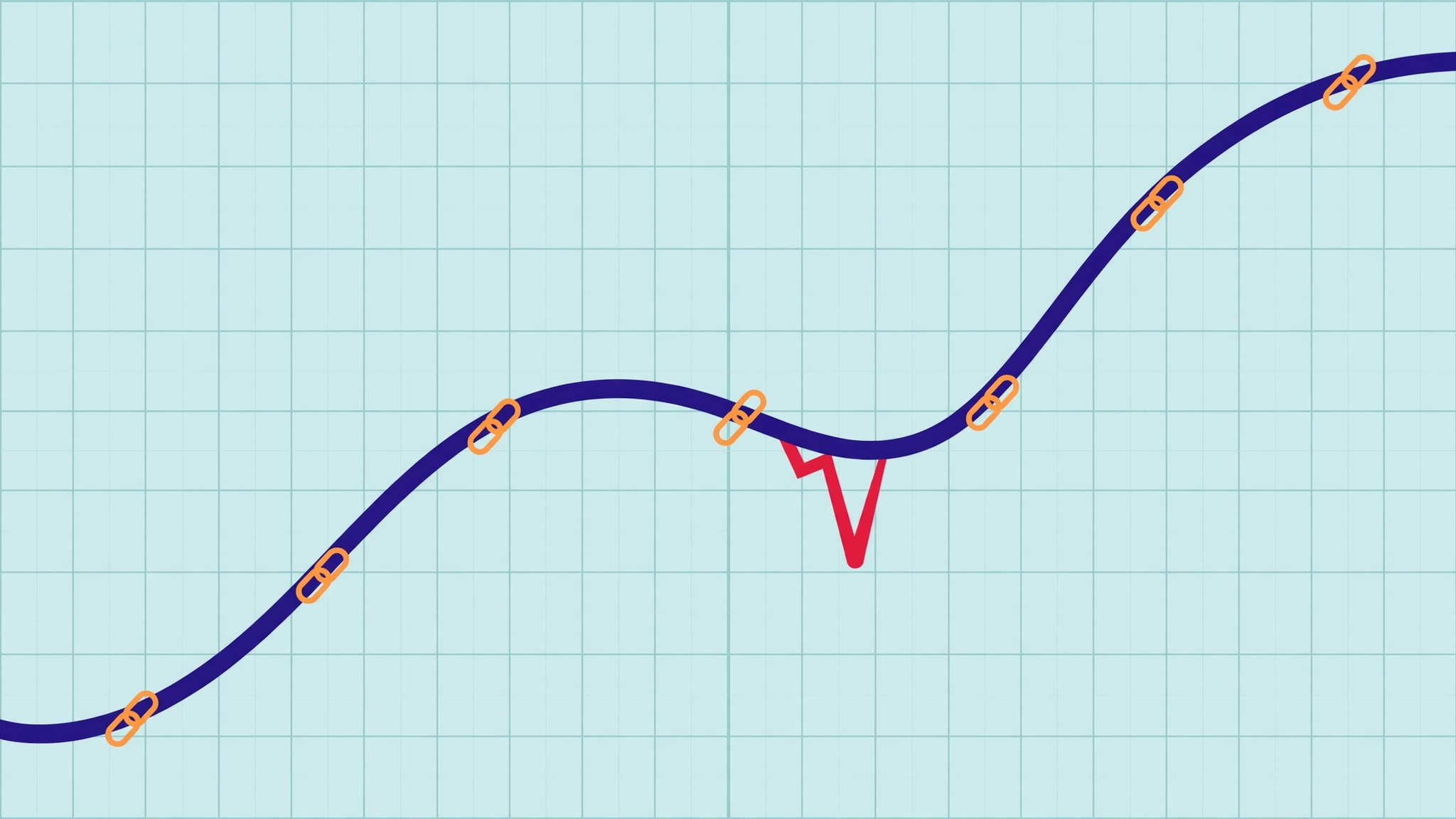
Consistency beats bursts. The classic red flag is building 50 links in one week and then nothing for three months. A steady, month-over-month climb — even a modest one — reads as organic growth. That said, consistency does not mean robotic sameness: real sites have natural ebbs and flows. Small fluctuations are fine; the problem is only extreme, unexplained spikes.
What Google Actually Says About Link Velocity
Here is where many SEO guides go wrong. Google’s John Mueller has directly addressed this topic and effectively debunked the “speed limit” myth. His position: “It’s not so much a matter of how many links you get in which time period. It’s really just… if these are links that are unnatural or from our point of view problematic then they would be problematic.” In other words, Google cares about the quality and naturalness of the links, not the raw speed at which they arrive.
This is corroborated by Search Engine Land’s breakdown of the topic: if your content genuinely goes viral, a sharp increase in diverse, authentic links is entirely natural — and can even be read as a positive signal of topicality and popularity. Google’s algorithms are designed to distinguish a viral surge from a manufactured one by examining where the links come from, not just how many appear.
The practical takeaway: stop obsessing over an exact number and start obsessing over link velocity SEO patterns. A sudden influx of links from irrelevant directories, private blog networks, and low-quality sites will draw scrutiny no matter how “slow” you think you are going. A hundred high-quality editorial links earned during a major campaign will be fine. The pattern matters more than the pace.
5 Red-Flag Patterns That Trigger Penalties
Since Google does not publish a speed limit, penalties and algorithmic filters are triggered by combinations of signals. Good link velocity SEO is really about pattern hygiene, not a number on a dial. Watch for these five patterns in your own link profile:
- The zero-to-hero spike. A new or quiet domain gains hundreds of referring domains in days or weeks with no corresponding real-world event — no launch, no viral content, no press coverage. This is the single most common trigger for algorithmic suspicion.
- The identical-link flood. Dozens of new links all using the same exact-match anchor text, pointing to the same page, from sites in the same niche. Natural link profiles have diverse anchors (branded, generic, naked URLs, partial match); a profile that is 80% exact-match anchors looks engineered.
- The single-source cluster. A surge of links from sites that are clearly related — same IP ranges, same registrars, same templates. Google is very good at detecting networks, and link velocity combined with network footprints is a fast track to a manual action.
- The stop-start rhythm. Fifty links in week one, zero for two months, then another blast. Agencies that “do link building” as a quarterly campaign rather than an ongoing program create this pattern. Tie link acquisition to continuous activity instead.
- The relevance desert. A fitness blog suddenly earning links from casino sites, essay mills, and unrelated foreign-language domains. Irrelevant links at high velocity are doubly suspicious because there is no plausible editorial reason for them to exist.
If you spot one of these patterns in your backlink profile, the fix is rarely to slow down — it is to clean up. Disavow the worst offenders only when you are facing a manual action or a clear negative SEO attack; otherwise, focus on diluting the bad pattern with legitimate, relevant links earned through real outreach and content.
How to Build Links at a Natural, Defensible Pace
The safest link velocity SEO practice is to tie every link-building push to a real-world marketing activity. Launching new content, securing PR placements, forming partnerships, publishing original research, and promoting products all create logical reasons for increased link acquisition. When your link velocity SEO chart can be explained by your marketing calendar, it is defensible by definition.
Follow the gradual ramp: if your site is new, start with 5–10 quality links per month for the first few months, then increase by roughly 20–30% per month as your content library and brand presence grow. A month-one plan of 20 links followed by month-two at 40 and month-three at 80 looks dramatically more natural than 0, 0, then 100 — even though the total is the same.
Diversify aggressively as you scale. A natural profile mixes dofollow and nofollow links (a profile with zero nofollow links is itself a red flag), varies anchor text across branded, generic, naked-URL, and partial-match types, and spreads links across many pages rather than pointing everything at one money page. Guest posting on real, relevant publications remains one of the most reliable ways to earn diverse editorial links — check current guest post pricing by DR tier to budget your campaigns realistically instead of chasing suspiciously cheap placements.
Finally, correlate links with content. The most common velocity mistake is building links to a site that has not published anything new in months. Google expects link growth to follow content growth. A simple rule: never run an active link campaign to a page you have not touched, updated, or promoted in the last 30 days.

Monitoring Your Link Velocity: A Simple Monthly Checklist
You cannot manage what you do not measure. Run this quick link velocity SEO audit once a month using any backlink tool (Ahrefs, Semrush, or Google Search Console’s link report):
- Count new referring domains for the month and compare against the last three months. A deviation of more than 3x your baseline deserves investigation.
- Check anchor text distribution. Exact-match anchors should generally stay under 10–15% of your profile; branded and naked-URL anchors should dominate.
- Review link sources for relevance. Scan the top new linking domains — do they make editorial sense for your niche? Flag anything that looks like a directory farm or link network.
- Map spikes to events. Every significant uptick should have a matching cause: a published article, a PR hit, a partnership. Unexplained spikes are the ones that get you in trouble.
- Watch your link loss rate too. Velocity is net growth. If you gain 40 links but lose 35 to deleted pages, your profile is churning — fix retention before accelerating acquisition.
Conduct a full backlink audit quarterly, or monthly if you are actively building. Always audit immediately before and after a major campaign so you have a clean before-and-after baseline.
Link Velocity and Buying Links: What Changes
Let us be direct: purchased links are the most common reason velocity goes wrong. Link vendors often deliver in bulk — fifty “DR 50+” placements in two weeks — because that is how they operate, not because it is safe for your site. If you are acquiring links commercially, the link velocity SEO rules do not change; they become more important, because every link you buy carries inherent risk that a genuine editorial link does not.
The safe approach is drip-feeding: negotiate placement schedules spread over weeks, not days. Mix purchased placements with earned ones — digital PR, genuine guest contributions, unlinked brand mentions converted to links, and podcast appearances all count and all dilute the commercial pattern. And vet every placement for relevance and real traffic before it goes live, because a fast link from a spammy site is the worst of both worlds. Read our full guide on whether buying backlinks is safe in 2026 before committing budget.
FAQs
What is a safe link velocity for a brand new website?
For a brand-new site, aim for 5–10 high-quality referring domains per month during the first six to twelve months. This gradual pace looks natural to search engines and lets you focus on quality. Rapid initial growth on a zero-authority domain is one of the clearest manipulation signals, so patience in year one pays off.
Can Google penalize you just for building links too fast?
Not for speed alone. Google’s John Mueller has clarified that there is no official speed limit — what gets penalized is unnatural link patterns. A viral article earning 500 links in a week is fine; buying 500 spammy links in a week is not. The link velocity SEO risk comes from link quality and patterns, not raw counts.
How many backlinks per month is safe for an established site?
Established sites with real content output can safely earn 20–50+ new referring domains per month, and authority brands routinely exceed that. The key is that velocity should scale with your site’s age, existing authority, and publishing frequency. Sudden 10x jumps from your baseline — without a launch or PR event — are what trigger scrutiny.
Do nofollow links count toward link velocity?
Nofollow links do appear in your acquisition pattern, and a natural profile includes plenty of them — social mentions, forum citations, press links. Having zero nofollow links actually looks more suspicious than having a healthy mix. Do not avoid nofollow opportunities; they add authenticity to your link velocity SEO profile and drive real traffic.
What should I do after an unnatural link spike?
First, do not panic and mass-disavow — Google usually discounts bad links automatically. Audit the spike’s sources for spam patterns, remove or disavow only the clearly toxic ones, and then dilute the pattern by earning legitimate editorial links through content and outreach. Document the event so future velocity looks like a recovery, not a habit.